

A watery sourdough starter is rarely spoiled. It's usually caused by excess hydration, an overdue feed, or warm fermentation pushing the culture past its peak, so first check its smell and activity before adding flour.
You open the jar expecting a domed, bubbly culture and find a thin layer of clear, gray, or dark liquid instead. The starter underneath may still have bubbles, but it looks loose, separated, and nothing like the thick mixture you fed earlier. That moment makes many bakers ask whether their sourdough starter is watery because it's dead or contaminated.
Usually, the liquid is a fermentation signal, not an automatic safety problem. The useful question isn't "How do I make this thicker?" It's when did the liquid appear, and what did the starter do before it appeared? Liquid immediately after feeding points toward hydration or flour absorption. Liquid after a rise and collapse points toward hunger or over-fermentation.
Table of Contents
- Why Your Sourdough Starter Separates
- Three Reasons Your Starter Looks Runny
- How to Feed and Stabilize a Weak Starter
- When to Save the Starter and When to Toss It
- Flour, Temperature, and Feeding Rhythm
- Building Reliable Starter Habits
Why Your Sourdough Starter Separates
A baker may notice the problem first thing in the morning. The jar has risen, left a high-water mark, and dropped again. On top sits a dark or clear layer, while the lower portion looks pasty and active. It's easy to assume the culture has failed, but separation is often the jar showing you that fermentation has moved beyond the point you observed.
Sourdough starter is a fermented mixture of flour and water containing wild yeasts and lactic-acid bacteria. Flour enzymes break starch into sugars, yeast converts those sugars into carbon dioxide and ethanol, and bacteria produce lactic acid. As that process continues, the starter's structure can weaken and liquid can separate from the solids. Purdue's explanation of sourdough fermentation connects texture changes with fermentation conditions, including time, temperature, and water content.
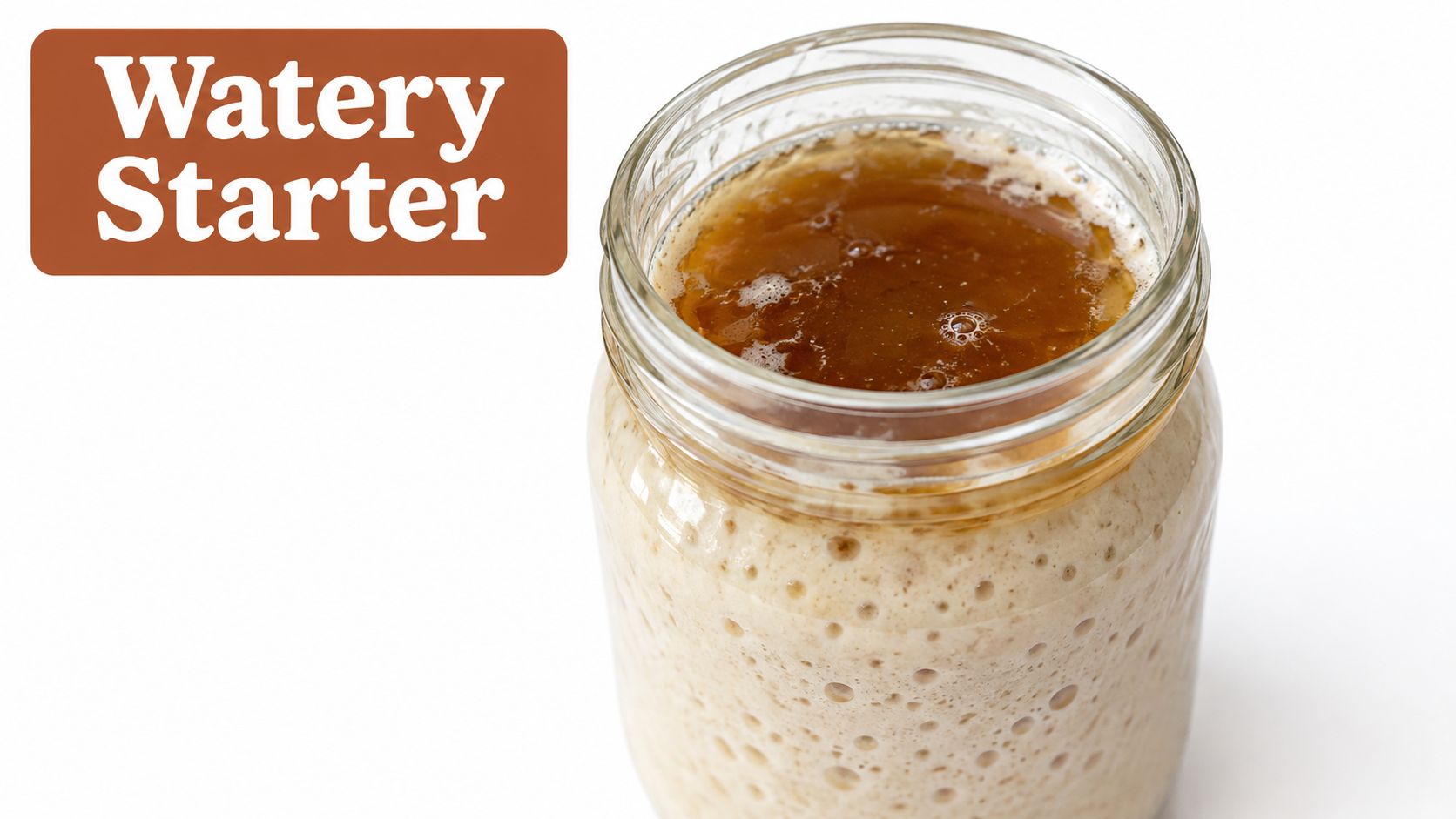
Read the jar before you change it
A watery starter often still gives useful clues:
- Bubbles and a sharp, pleasantly acidic aroma suggest ongoing fermentation.
- A rise followed by collapse suggests the culture has already passed its peak.
- Liquid immediately after feeding suggests the flour hasn't absorbed the water evenly, or the mixture is too hydrated.
- Little rise over repeated feeds points toward weak gas retention, insufficient feeding, or an immature culture.
The liquid itself doesn't prove spoilage. Fermentation can produce alcohol and acids, and the structure holding the mixture together can loosen as the available food declines. The practical response is to observe first, then choose a feeding or temperature correction rather than blindly adding flour. For a broader diagnostic reference, use this sourdough starter troubleshooting guide.
Three Reasons Your Starter Looks Runny
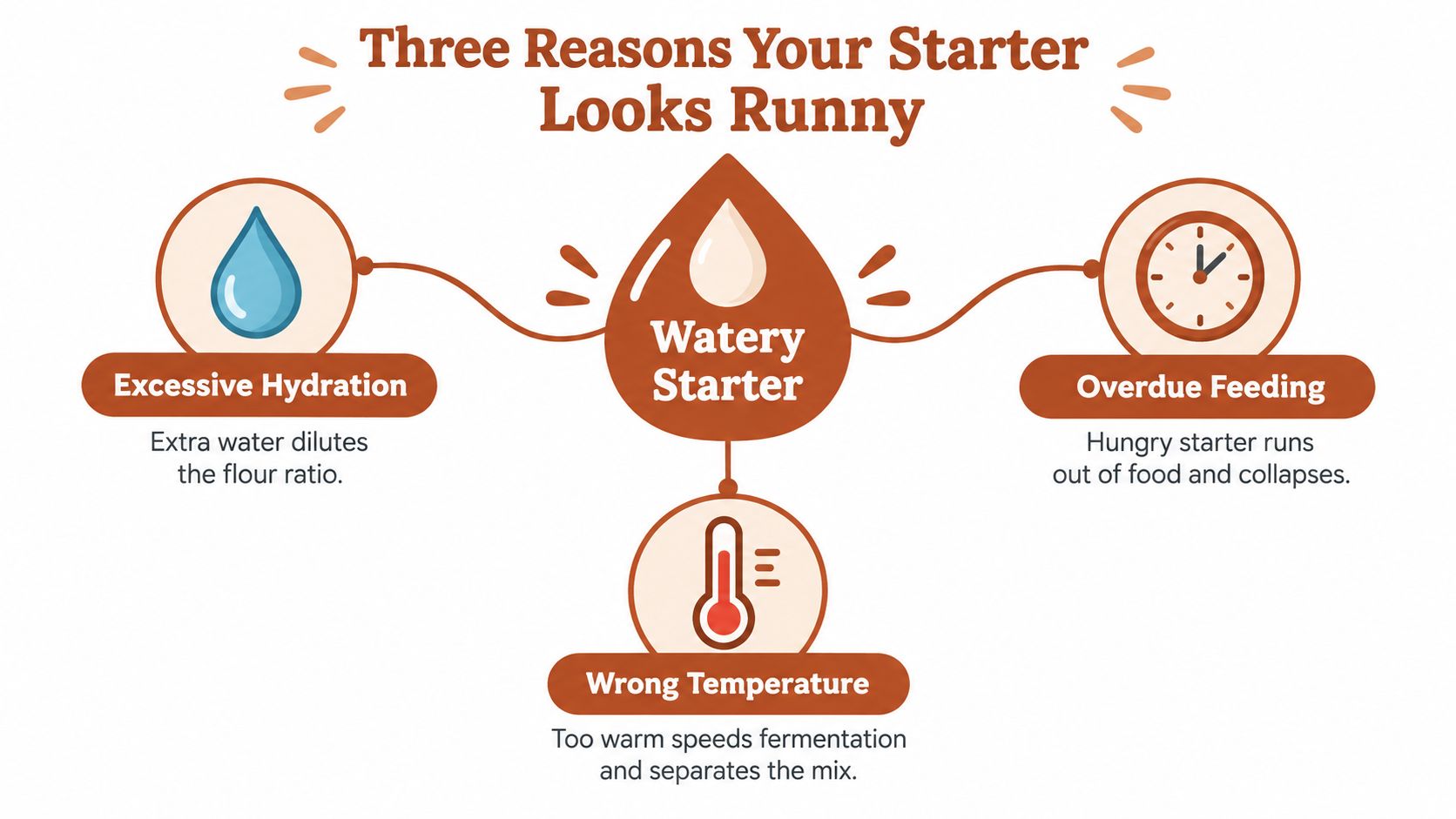
The same symptom can come from different causes. A starter that separates five minutes after feeding needs a different correction from one that becomes watery after it rises and collapses.
Excessive hydration
A standard liquid starter is maintained at approximately 100% hydration, meaning equal weights of flour and water. That ratio can work well, but flour absorption varies. A highly hydrated culture may look like a pourable batter, especially when made with refined flour or when the mixture hasn't had enough time to absorb the water.
If your starter looks watery almost immediately after feeding, weigh the ingredients again. Don't correct a scale error by repeatedly dumping in flour without measuring. Instead, use less water in the next feed and aim for a thick batter that holds ridges briefly after stirring.
Reducing hydration to 50–60% creates a stiffer culture with slower fermentation and a longer peak window, according to the starter maintenance research review. The trade-off is that a stiff starter may rise less dramatically and can be harder to mix evenly.
An overdue feeding
If the starter first rises and later develops a liquid layer, it may have consumed much of its available food. Continued fermentation increases acidity, weakens the mixture's structure, and can leave a thick layer beneath a liquid commonly called hooch.
Adding flour alone often fails. Without discarding enough old culture, you preserve the accumulated acidity and make only a larger, diluted jar. A measured discard and refresh is more effective.
Warm fermentation
Heat and hydration work together. A warm, highly hydrated starter can ferment quickly, reach its peak sooner, and become liquid before your usual feeding time. The same schedule may behave differently from one day to the next if the room temperature changes.
A thin starter without a distinct liquid layer may also reflect acid-driven structural breakdown or a flour choice with weaker gas retention. Look at the timing, surface shape, and rise rather than treating texture as an isolated problem.
How to Feed and Stabilize a Weak Starter
Start with the smallest intervention that fits the evidence. If the separated liquid smells pleasantly acidic and there's no mold or unusual color, stir it back in. If the aroma is putrid or the surface looks contaminated, don't stir and hope for the best. Discard the culture instead.
For a normal hungry starter, use this reset:
- Weigh the culture. Keep a small seed portion and discard the rest. This prevents acidity from accumulating indefinitely.
- Refresh at 1:1:1 by mass. Use equal weights of starter, flour, and water. A measured ratio is more repeatable than scooping equal volumes.
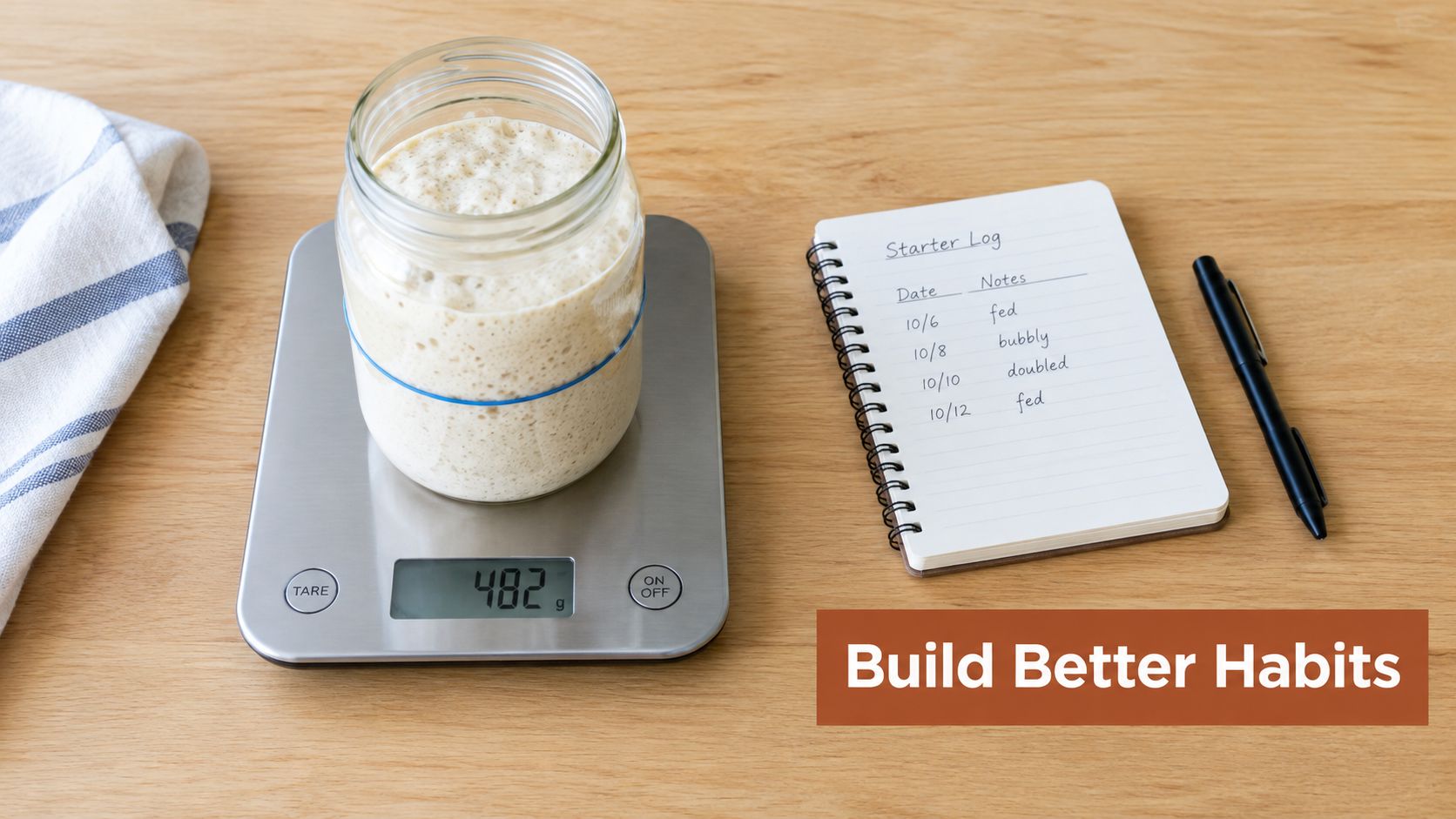
- Mix thoroughly. Scrape down the jar and mark the starting level with a rubber band or piece of tape.
- Control the environment. Ferment around 24–26°C, then observe the rise, aroma, and surface rather than relying on the clock alone.
- Feed near peak. Look for visible expansion and a domed or recently flattened surface. Waiting for complete collapse often gives the culture a larger acidity swing.
If the starter separates repeatedly, reduce the water in the next feed until it reaches a thick batter consistency. The aim isn't to create the stiffest possible culture. It's to slow fermentation enough that the starter remains usable across your actual baking schedule.
Track three cycles, not one
A single feed can mislead you. Record the following for at least three cycles:
- Flour type
- Room temperature
- Starter-to-flour-to-water ratio
- Time to visible expansion
- Time to peak
- Whether the surface domed, flattened, or collapsed
- Aroma before the next feed
This turns “my starter suddenly went watery” into a pattern. If it peaks early every time, adjust timing or temperature. If it never rises, consider flour choice, weak gas retention, or an immature culture. The sourdough starter feeding ratio guide offers additional guidance on measured refreshes and consistency.
A float test can be secondary at most. Gas retention depends on flour composition, hydration, and timing, so expansion and aroma are more useful operational indicators.
When to Save the Starter and When to Toss It
Liquid on top deserves inspection, not panic. Clear or grayish liquid paired with a normal sour, acidic, or alcoholic aroma often means the starter is hungry. Stirring it in and refreshing the culture can be reasonable when the starter still shows ordinary fermentation signs.
Safety concerns look different. Color, smell, and surface growth matter together, and no feeding ratio can repair visible mold or suspicious contamination.
| What you observe | More consistent with | Action |
|---|---|---|
| Clear or grayish liquid, bubbles, sour aroma | Hunger or advanced fermentation | Stir in if the aroma is normal, discard and refresh |
| Liquid after a rise and collapse | Overdue feeding or over-fermentation | Reduce retained starter and feed by weight |
| Little rise across repeated feeds | Weak gas retention or immature culture | Track the cycle, adjust flour, hydration, or timing |
| Pink, orange, or otherwise unusual color | Possible contamination | Discard the entire culture |
| Fuzzy growth or mold | Contamination | Discard the entire culture |
| Putrid odor resembling decay | Safety problem | Discard the entire culture |
| Solvent-like aroma without other contamination signs | Severe hunger or advanced fermentation | Don't rely on smell alone, refresh cautiously only if the culture looks otherwise normal |
A mature starter commonly reaches approximately pH 4.0 as lactic-acid bacteria develop, while rye cultures in one fermentation study reached values as low as pH 3.42 after 48 hours, with other samples averaging about pH 3.53. These figures show why acidity changes with fermentation conditions, but pH alone isn't a home-kitchen safety test. You still need to inspect the culture.
Temperature changes the timetable. A warm room can push microbes through available food faster than expected, so a starter may separate before your usual feeding interval. Refrigeration slows activity, but it doesn't remove the need to check the starter's surface, aroma, and container hygiene. When in doubt about a dead or contaminated culture, use this dead sourdough starter guide.
Flour, Temperature, and Feeding Rhythm
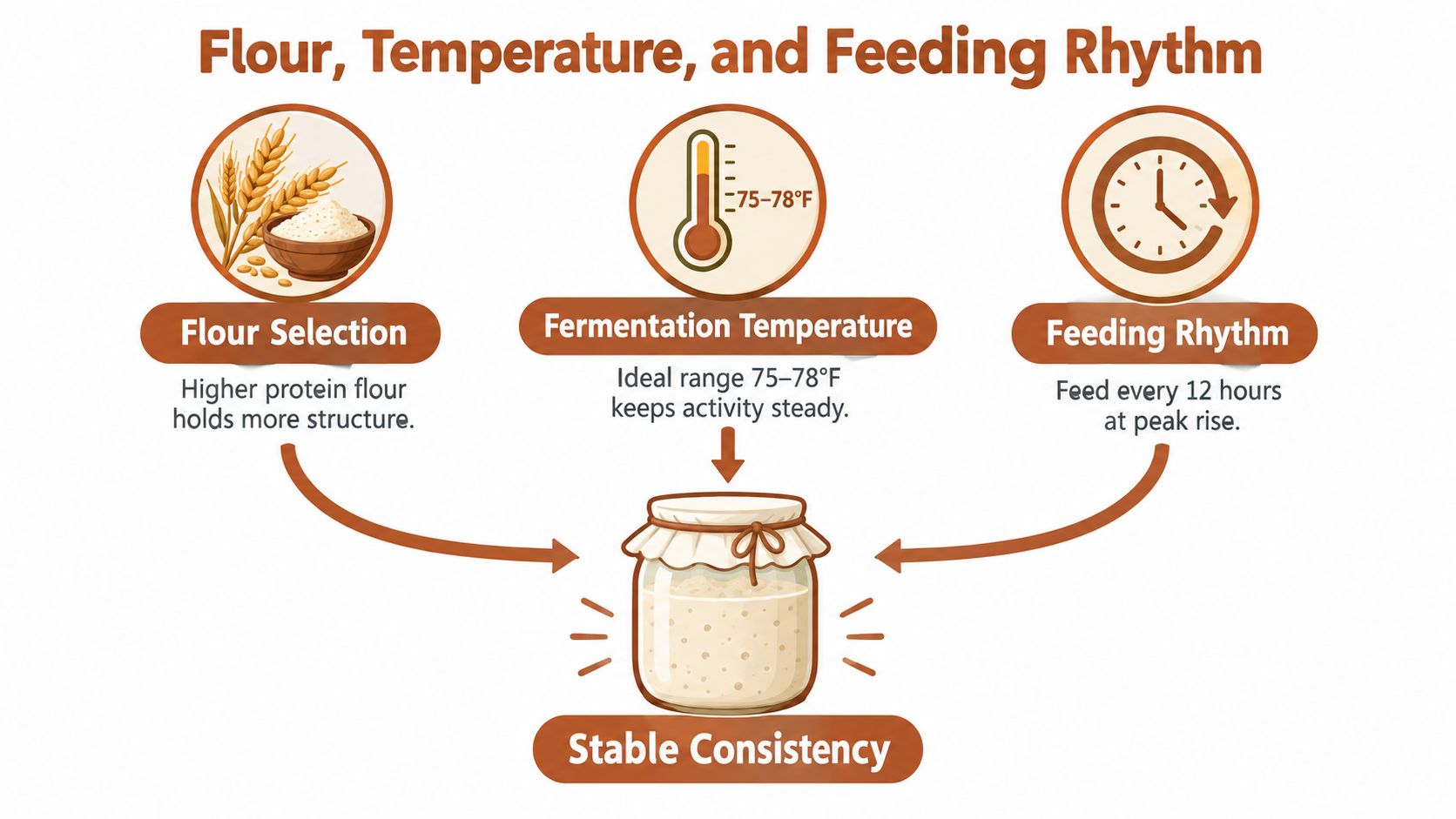
Starter consistency comes from managing several variables together. Whole-grain flour generally provides more minerals and microbial substrate than highly refined flour, while flour choice also affects water absorption and gas retention. A culture fed with whole-grain flour may develop differently from one maintained entirely with refined flour, even at the same measured hydration.
Temperature sets the pace. Research reviews identify flour type, hydration, temperature, time, and re-feeding practice as the main management variables, with ordinary Type I starters commonly maintained around 20–30°C. If you're trying to understand why a culture behaves differently in summer or near a heating appliance, this resource on the bacterial danger zone explained provides useful background on how temperature affects microbial growth.
Build a simple operating record
Mark the jar after feeding and record the time it reaches its highest point. Note whether the top is domed, flat, or sunken, then feed again near that established peak rather than waiting for total collapse. You'll learn more from that record than from changing flour, ratio, and temperature all at once.
The float test is particularly unreliable as a sole decision tool because a starter can contain gas without retaining it well enough to float. Volume increase, bubbles through the mixture, aroma, and repeatable peak timing give you a more practical picture of readiness.
A useful routine may include a small amount of whole-grain flour when the culture needs more microbial substrate, a cooler location when it peaks too quickly, or a stiffer feed when your schedule leaves long gaps between observations. Change one lever at a time, then compare the next cycle.
Building Reliable Starter Habits
The most dependable fix is less dramatic than rescuing a jar after it collapses. Weigh flour and water, mark the starting level, keep the vessel clean, and write down room temperature and peak timing. Those habits reveal whether the watery appearance follows a particular flour, a warm corner, or a delayed feed.
Feed near peak activity instead of treating a fixed clock schedule as universal. A starter that peaks predictably but becomes liquid before the next planned feed needs a schedule or hydration adjustment, not an endless addition of flour. A starter that never rises needs a different investigation.
Practical rule: Fix the variable that caused the separation. Don't turn every watery starter into a stiff starter if the real problem is fermentation running past peak.
For bakers who want fewer environmental swings during dough fermentation and proofing, precision tools can remove some of the guesswork after the starter is ready. DBakerAid™’s SureDough™ system controls fermentation and proofing conditions, and its companion recipe app is available at dbakeraid.app. It's an option for bakers working with difficult, high-protein, or specialty doughs who want repeatable temperature and timing rather than relying entirely on room conditions.
A watery sourdough starter is usually manageable when you identify the timing of the separation, inspect the culture, and make one controlled adjustment. Keep the record for a few feeds, and the jar will stop looking mysterious.
DBakerAid™ brings controlled fermentation and proofing into the home kitchen, helping reduce the temperature and timing swings that make sourdough and specialty dough unpredictable. Visit DBakerAid™ to explore the SureDough™ system and build a more repeatable bread routine.