

You mix the dough at night, cover the bowl, and put it in the refrigerator because tomorrow's schedule is already full. By morning, you want dough that has developed flavor without turning into a sticky, collapsed mess. That's the practical appeal of cold fermentation bread. The refrigerator buys time, but it doesn't remove the need for calibration.
Cold fermentation also matters when you're making homemade protein bread. Added whey, pea, soy, collagen, and vital wheat gluten make dough stiffer and less forgiving than ordinary sandwich dough. A controlled ferment can help, but only if your yeast dose, dough strength, and actual refrigerator temperature work together.
Table of Contents
- What Cold Fermentation Does to Bread Dough
- The Four Variables That Control Every Cold Ferment
- Timing and Temperature Windows for Common Doughs
- Shaping and Baking Dough Straight from the Fridge
- Why Cold Fermentation Improves Flavor, Crumb, and Crust
- Troubleshooting the Most Common Cold Ferment Failures
- Adapting Cold Fermentation for Enriched and High-Protein Doughs
What Cold Fermentation Does to Bread Dough
You mix dough after dinner, place it in a refrigerator that runs warmer than the recipe assumes, and find little movement the next morning. That result is common. Cold fermentation bread depends on the dough's starting temperature, yeast dose, and the actual temperature of the shelf, not on an ideal timetable.
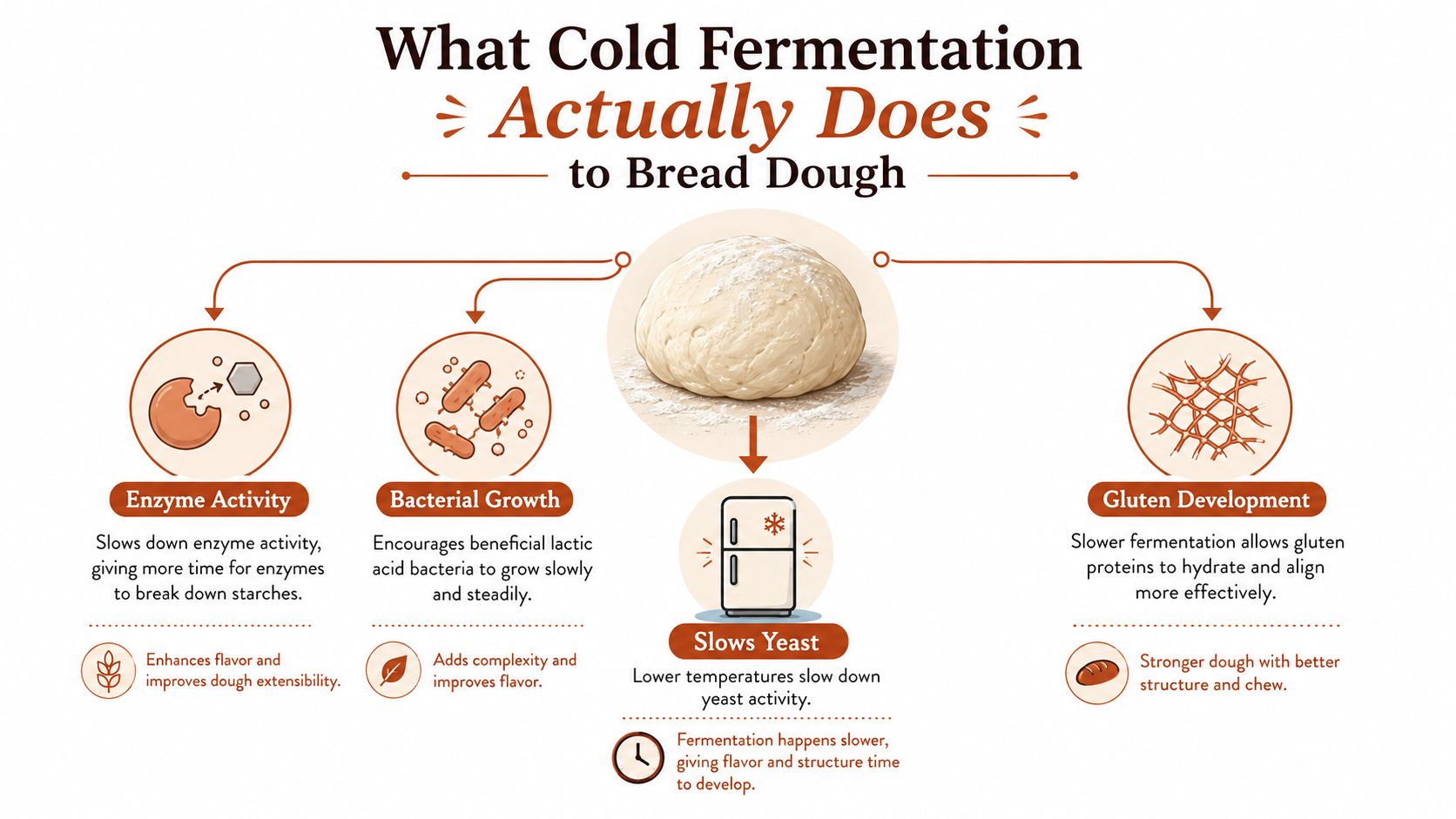
Cold fermentation holds dough in a refrigerator so yeast activity slows while other processes continue. General guidance places the dough around 2–8°C, with schedules that may run 8–14 hours for a final-proof retard, 12–18 hours for a bulk retard, or up to 3 days for some strong white doughs, as described in current baking-industry fermentation guidance. Those windows are reference points, not guarantees. A home refrigerator near the cold end can leave dough underproofed, while a warmer shelf can push the same dough into overproofing.
The refrigerator changes how time works in the bake. Yeast produces gas slowly, while enzymes continue modifying starches and proteins. Given enough time, the dough often develops fuller aroma, handles more cleanly, and produces a crust that colors readily in the oven. The trade-off is slower early activity, so a dough may need room-temperature time before or after refrigeration.
A technique older than modern yeast
Long fermentation predates modern commercial yeast. A major food-fermentation reference describes Sumerians in southern Mesopotamia baking leavened bread around 10,000 BC, with sourdough stored as dough so lactic acid fermentation could continue during rest. The same historical record documents one of the oldest known sourdough breads at about 3700 BC in Switzerland, in this historical reference on bread fermentation.
These dates do not show that ancient bakers used refrigeration. They show that resting dough has served bakers for thousands of years, before industrial yeast became common less than 150 years ago. Refrigeration gives home bakers more control over that older process.
Practical rule: The refrigerator slows fermentation. It does not stop every change in the dough.
At cold temperatures, yeast gas production is restrained, but enzymes and lactic acid bacteria can still affect flavor and structure. For a closer explanation of those processes, consult D'BakerAid's fermentation science guide. The method works best when the yeast amount matches the actual fridge and the planned timing.
The Four Variables That Control Every Cold Ferment
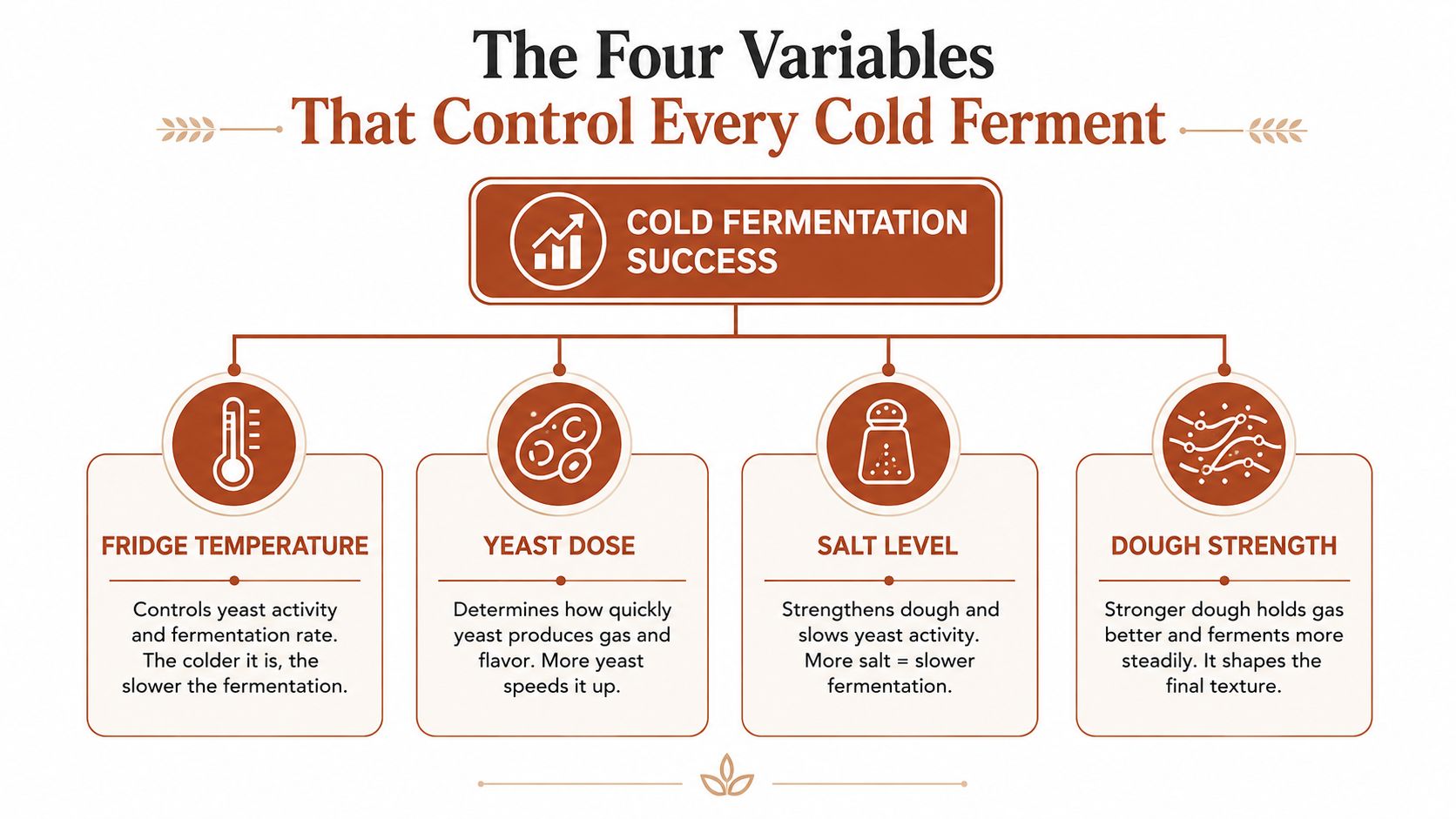
A cold ferment succeeds through calibration, not a universal timer. A refrigerator running near 2°C can leave dough almost unchanged overnight, while a shelf closer to 8°C may drive the same yeast dose much further. Flour strength, enrichment, and the dough's starting temperature widen that difference.
Fridge temperature comes first
Measure the temperature where the dough sits with a refrigerator thermometer. Practical cold-fermentation guidance commonly places refrigerator fermentation around 2–5°C, while broader baking guidance uses 2–8°C. Near 10°C, yeast activity becomes slow enough that fermentation may appear stalled in a home-baking schedule. Treat that as a working observation, not a sharp cutoff. The relevant ranges are outlined in cold-fermentation terminology guidance.
A colder shelf can leave the dough looking nearly unchanged by morning. That is not automatically failure. On a warmer shelf, the same yeast dose may carry the dough past its useful window before you check it.
Yeast dose must match the schedule
The useful question is not how long every dough should stay refrigerated. Set the yeast amount for the actual refrigerator, the dough, and the target time. This cold-proofing guide treats yeast quantity and retard length as connected decisions, rather than fixed instructions.
Start with the recipe's yeast amount and record what happens. If the dough repeatedly overproofs overnight, reduce the yeast modestly or shorten refrigeration. If it remains tight with little expansion, build more fermentation at room temperature before chilling, or extend the cold period. Make one adjustment at a time.
Salt and dough strength change the pace
Salt slows fermentation and tightens dough. Flour choice, mixing, gluten development, hydration, and added vital wheat gluten determine how well the dough holds gas. Strong dough can retain shape during a long retard. Weak or heavily enriched dough can spread or lose structure even when the timing looks reasonable.
Use the dough as the final measure:
- Temperature check: Record the refrigerator temperature and dough temperature before chilling.
- Yeast adjustment: Change one variable at a time, so the result remains readable.
- Strength assessment: Stretch the dough gently. It should extend without tearing immediately.
- Expansion check: Mark the dough level before refrigeration and compare it later.
For a closer explanation of temperature and yeast activity, use D'BakerAid's yeast fermentation temperature guide. A timeline that works in one refrigerator may stall in another, so keep notes on shelf position, dough temperature, yeast dose, and visible expansion.
Timing and Temperature Windows for Common Doughs
A dough mixed after dinner may still be underfermented by breakfast in one refrigerator, while the same formula can overproof overnight in another. Set the schedule from your actual fridge temperature, dough temperature, and yeast or starter activity. The windows below are starting points, not guarantees.
| Dough Type | Fridge Temp | Bulk Retard | Final Proof Retard | Maximum Window |
|---|---|---|---|---|
| Sourdough bulk retard | 4°C | 12–18 hours | Not the primary use | Depends on starter activity and dough strength |
| Instant-yeast artisan loaf | 4°C | Not the primary use | 8–14 hours | Usually the stated final-proof window |
| Strong white bread | 3°C | Recipe-dependent | Recipe-dependent | Up to 3 days for some doughs |
The practical ranges align with baking-industry cold-retardation guidance, but your refrigerator decides how quickly the dough moves. A dough chilled close to full proof can overferment during the same period that a newly mixed dough barely changes. If your fridge runs warmer than its setting, reduce the yeast or shorten the cold period. If it runs colder, use more room-temperature fermentation before chilling or allow a longer schedule.
Bulk retard versus final-proof retard
With a bulk retard, chill the dough before shaping. It continues fermenting slowly in the container, then gets divided, pre-shaped, rested, shaped, and proofed before baking. Cold dough feels firmer and can be easier to handle, but it may need counter time before it stretches cleanly.
A final-proof retard starts after shaping. Shape the dough, cover it well to prevent a dry skin, and refrigerate it overnight. Check the dough cold the next day. If it has expanded and shows a gentle wobble, it may be ready to bake. A low yeast dose suits a longer, colder schedule, while a higher dose can push the same dough past its proofing window before morning.
Read the dough, then consult the clock
Ready dough shows expansion, surface tension, and a controlled jiggle. Press a finger lightly into the surface. The mark should recover slowly. Immediate spring-back suggests underproofing; a dent that remains points toward overproofing. Use the clock to choose when to inspect, then let the dough's condition decide whether to bake, warm briefly, or extend fermentation.
Shaping and Baking Dough Straight from the Fridge
Cold dough is often easier to score and transfer because it holds its shape. The mistake is assuming every dough should go directly from the refrigerator into the oven, or that every dough must warm first.
Finish bulk fermentation before chilling
Before refrigeration, look for visible expansion, a smoother surface, and bubbles along the container wall if the dough allows you to see them. The dough shouldn't need to double. Many cold-fermented doughs are ready when they've risen substantially but still have strength left for shaping and oven spring.
If the dough is still dense and resistant after chilling, don't force the shaping. Give it a short counter rest, then reassess. A cold, underfermented dough can feel firm and look tidy while producing a tight crumb later.
Shape with minimal handling
Turn the dough onto a lightly floured surface. If it feels stiff, let it relax briefly rather than kneading it aggressively. Pre-shape gently, rest until the surface tension eases, then complete the final shape with enough tension to support the loaf.
A sticky dough needs a scraper and restrained flouring. Excess bench flour can prevent the seam from sealing and leave dry patches in the crumb. For a high-hydration dough, damp hands and a lightly floured scraper usually work better than coating the dough in flour.
Decide whether it needs warming
Lean artisan loaves often bake well straight from the refrigerator after final proof. Enriched doughs, including loaves containing butter, milk, or eggs, may need a brief counter rest if they feel rigid and show little movement. The right cue is elasticity and proofing activity, not a mandatory warming period.
Score cold dough with a sharp lame. Make the cut decisively, then load the loaf into a properly heated Dutch oven or onto a preheated surface with steam available. Cold dough is less likely to spread during this handoff, which protects the shape you built during shaping.
The cold loaf should feel firm enough to score, but alive enough to respond in the oven.
A deeper crust color can result when the dough has developed more fermentable sugars during the retard. Watch the crust closely, particularly with doughs containing dairy, sweeteners, protein powders, or whole grains, because they can brown faster than a plain white loaf.
Why Cold Fermentation Improves Flavor, Crumb, and Crust
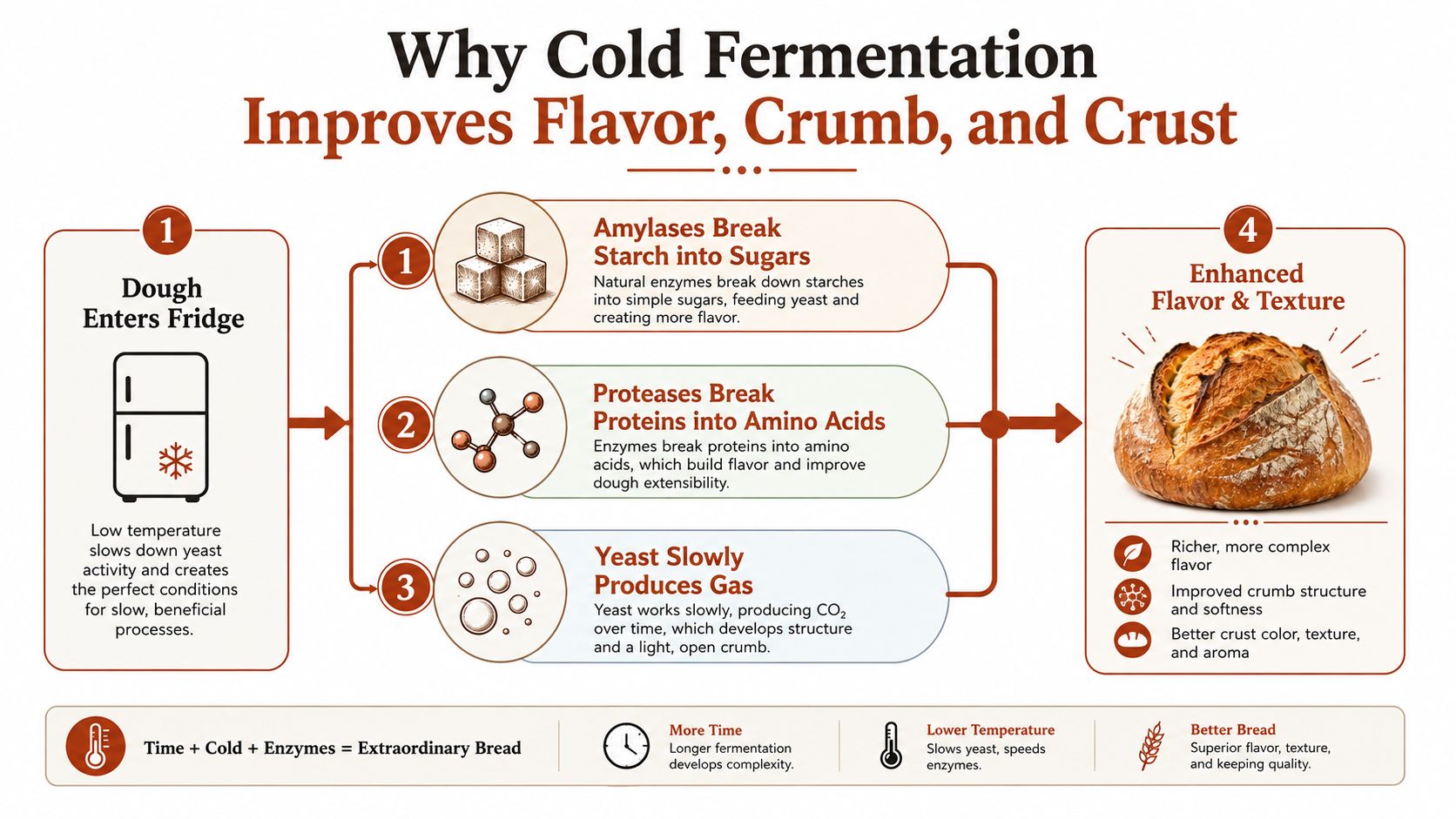
Cold fermentation improves bread through several processes that continue even after yeast activity slows. Enzymes break starch into fermentable sugars, supporting both aroma and crust browning. Protease also alters the dough's protein network, which can improve extensibility when the dough remains within its fermentation window.
Sourdough develops along a second path. Lactic acid bacteria continue producing organic acids during the cold rest, adding aroma and measured acidity. The refrigerator does not guarantee better flavor, though. If the dough overferments, the same long schedule produces weakness and harshness.
What the research supports
A 2026 study reported high-quality wheat bread from fermentation at 15°C with selected yeast and yeast, lactic-acid-bacteria cocultures. The authors highlighted cold-adapted and cryopreserved strains for dependable low-temperature performance in the study of selected microbial systems for wheat bread.
For home baking, the practical limitation is yeast selection and dose. A domestic refrigerator may slow ordinary yeast far more than expected, especially when the dough is chilled soon after mixing. A dose that works in one fridge can leave the dough stalled in another. Check the actual shelf temperature, then adjust yeast and room-temperature development to match the intended schedule.
The same reference mentions a 2023 study on French bread that associated long, low-temperature fermentation with improved sensory and nutritional attributes and lower acrylamide than shorter, warmer fermentation. That result does not guarantee the same outcome for every formula. It supports a narrower conclusion: time can support quality and may reduce process-induced contaminants when fermentation remains controlled.
Crumb and crust are trade-offs
A controlled cold ferment can give the crumb a fuller aroma and more organized structure. The dough may also score more cleanly, while additional fermentable sugars encourage deeper crust browning.
Those gains depend on the fridge and the yeast dose, not on elapsed hours alone. A warm refrigerator, an overly mature dough, or too much yeast can erase the benefit. Cold fermentation improves a sound process. It cannot repair weak mixing, poor dough strength, or overproofing.
Troubleshooting the Most Common Cold Ferment Failures
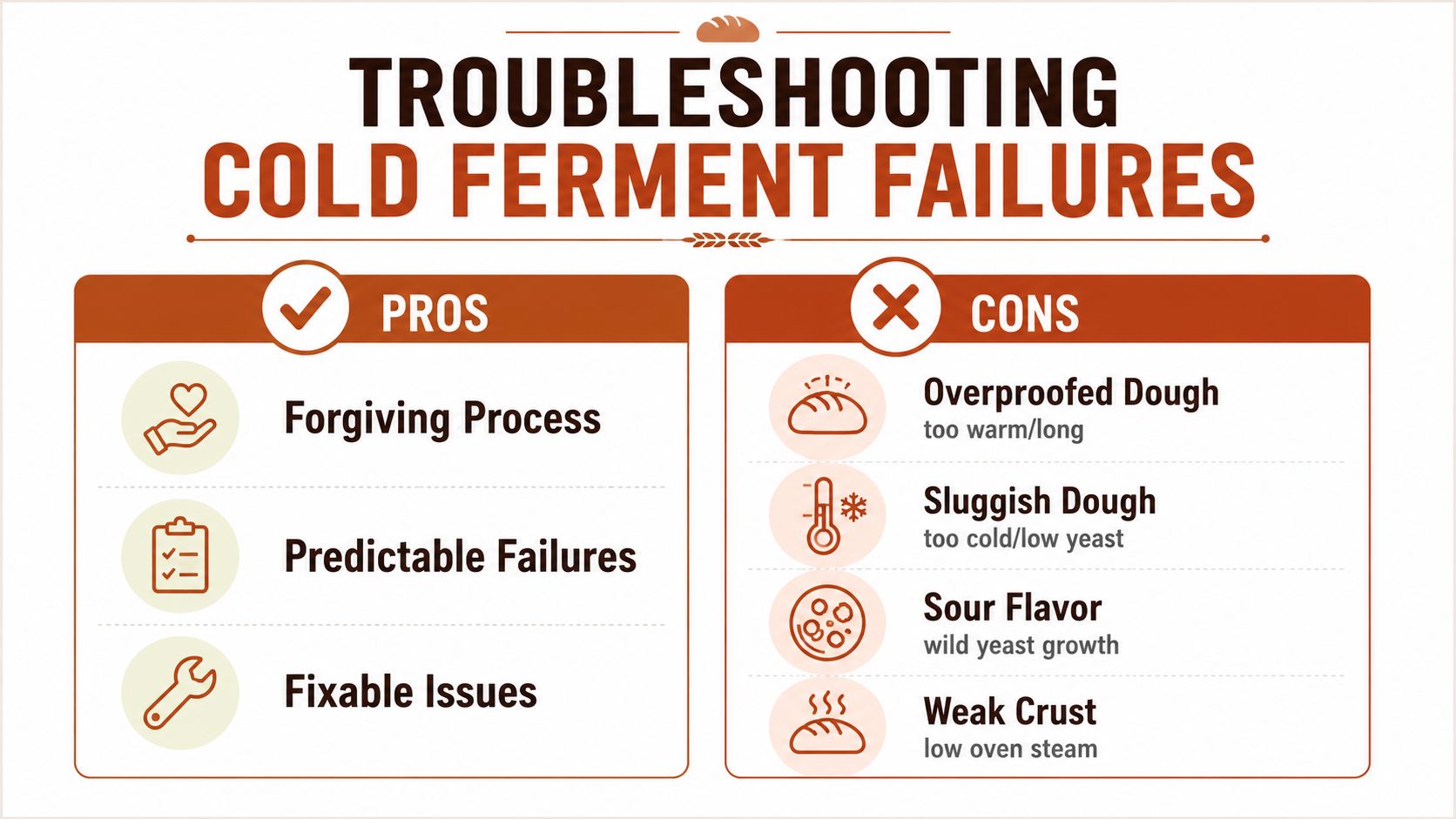
Cold fermentation is predictable once you stop treating the refrigerator as a neutral storage box. The four failures below usually point to a mismatch between temperature, yeast, dough maturity, or baking conditions.
The dough overproofs and collapses
If the dough rises aggressively in the refrigerator, your shelf is warmer than expected, the dough entered the fridge too mature, or the yeast dose is too high for the schedule. A collapsed score and wrinkled surface confirm that the dough has gone too far.
Shorten the retard first. If the pattern repeats, reduce the yeast modestly and measure the fridge temperature rather than guessing.
The loaf stays dense
A dense loaf may be underfermented, especially when the dough goes into a cold refrigerator immediately after mixing. Let it develop more at room temperature before chilling, or extend the cold period if the dough has strength and the schedule allows.
High-protein dough needs particular attention because added protein absorbs water and increases resistance. A firm dough isn't necessarily ready dough.
There's little oven spring
No oven spring often means the dough was shaped without enough strength, overproofed, or loaded into an oven that wasn't fully heated. Score cold dough cleanly, preserve surface tension during shaping, and use adequate steam during the early bake.
The flavor turns sharply sour
A strong sour or unpleasant flavor usually means the fermentation ran too long, the starter was unusually active, or the dough warmed during storage. Check the fridge temperature and shorten the next retard. Wild microbial activity can continue when the refrigerator is warmer than assumed, so “it was in the fridge” isn't a sufficient diagnosis.
Adapting Cold Fermentation for Enriched and High-Protein Doughs
Enriched doughs can move quickly after refrigeration. Butter, milk, and eggs soften the dough, and the final proof may accelerate as it warms. Shape as late as practical, keep the dough covered, and do not leave it on the counter because a recipe states a warming instruction. Judge the dough by its expansion and feel, not the clock alone.
High-protein doughs behave differently. Whey, pea, soy, collagen, vital wheat gluten, and whole-grain flour produce a denser, stiffer, slightly tacky dough that often rises about 50–75% rather than doubling, matching the behavior described in D'BakerAid's high-protein formulas. Expect a tight, even crumb, a soft but heavier texture, clean slices, and faster browning. Because these ingredients absorb water and increase resistance, a firm dough may still need more fermentation.
Match the yeast dose to your actual refrigerator, not an ideal schedule. A warmer home fridge may require a shorter retard or less yeast, while a colder one may need more time before shaping. A useful routine is to mix Friday night, develop the dough at room temperature, refrigerate it covered, then shape and bake Saturday morning. A refrigerator thermometer helps establish the timing. For proofing and oven-temperature decisions, use D'BakerAid's proofing and oven-temperature guidance.
D'BakerAid's system separates yeast fermentation from dough proofing and provides time and temperature control. Its optional D'Steamer adds humidity during the early bake, offering one way to reduce variation in a home kitchen.
See the high-protein recipes for whey, pea, soy, seeded whey, and collagen loaves, then visit DBakerAid™ for its controlled fermentation and proofing system.