

Most bakers hear 00 flour and assume “premium pizza flour.” That shortcut causes more failed dough than it prevents. The number 00 describes an Italian milling classification connected primarily to ash content, not a guaranteed protein level, gluten strength, hydration capacity, or baking result. Bread flour, by contrast, usually signals a stronger protein range in U.S. markets, but even that label tells only part of the story.
So the useful question isn't, “Which flour has more protein?” It's, “What does this specific flour need to do in this specific dough and oven?” Once you read the protein, ash, and, when available, strength specifications together, bread flour vs 00 flour becomes a practical choice rather than a branding debate.
Table of Contents
- The Assumption Most Bakers Get Wrong About 00 Flour
- What Bread Flour and 00 Flour Mean
- Side by Side: Protein, Hydration, and Gluten Behavior
- Matching the Flour to Pizza Sandwich Bread and Pastries
- Hydration and Substitution Adjustments That Work
- Troubleshooting Dense Crumb Pale Crust and Weak Rise
- How to Choose the Right Flour for Your Oven and Recipe
The Assumption Most Bakers Get Wrong About 00 Flour
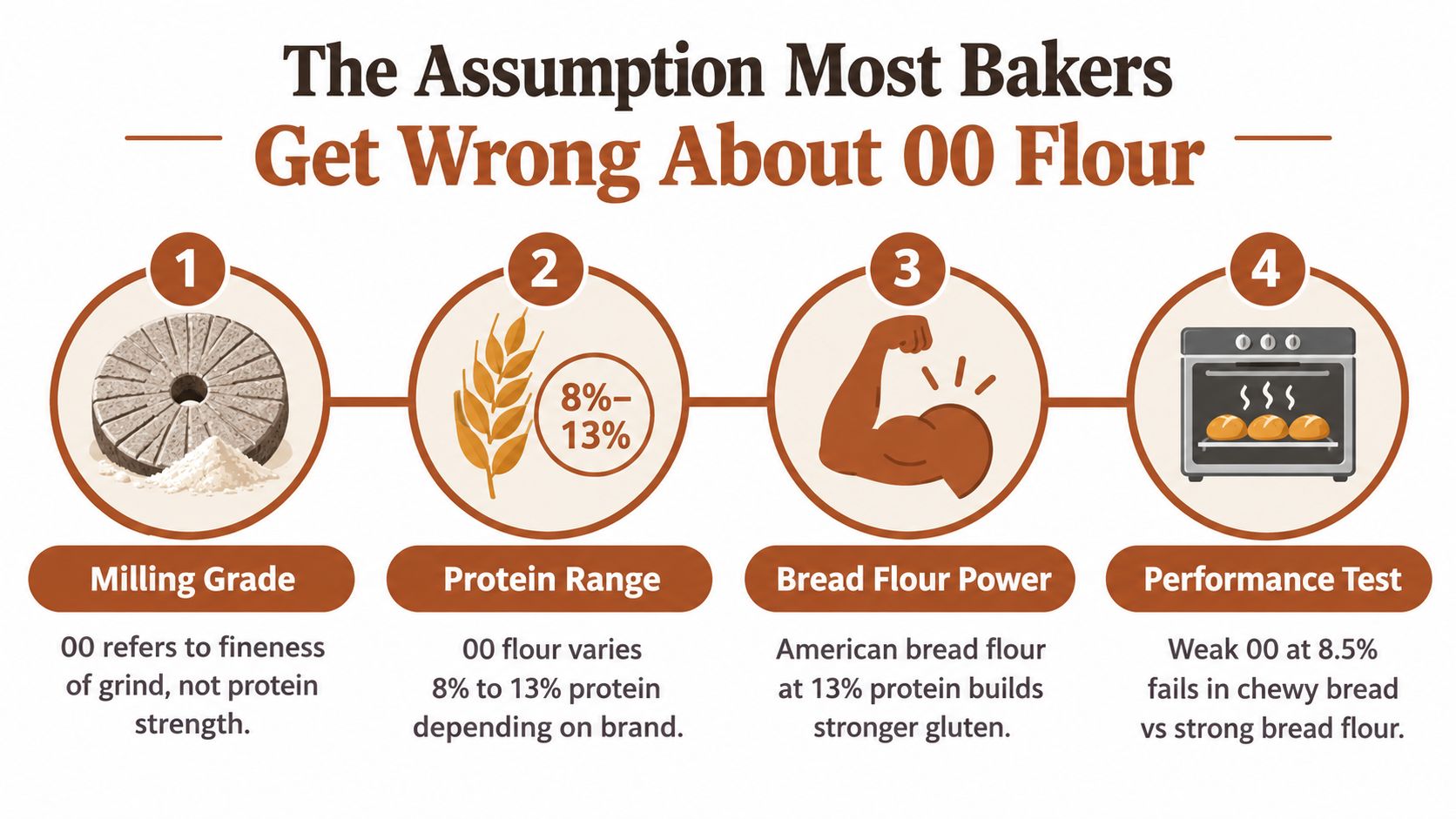
The most popular advice about 00 flour is also the least complete: 00 doesn't automatically mean strong, soft, or ideal for pizza. It identifies a refinement category, while protein and milling choices determine how the flour behaves in a bowl.
Bread flour at about 13% protein can outperform a weak 00 flour around 11% protein when the dough needs gas retention, chew, and height. The reverse can also be true. A strong 00 flour made for long-fermented pizza can deliver excellent extensibility and chew, particularly when the dough is baked in very high heat. The label alone won't tell you which side of that comparison you're holding.
Read the bag before changing the recipe
Start with the protein line, but don't stop there.
- Protein percentage: Bread flour is commonly around 12–13.5%, while Italian 00 can range roughly from 9% to 13.5%, depending on the mill and intended use. The protein-range comparison shows why two bags marked for pizza may perform very differently.
- W-value: Where a mill provides it, W indicates overall flour strength. Italian 00 products can span approximately W130 to W390, so the classification covers a broad functional range. This overview of Italian flour classifications illustrates why 00 isn't a single dough type.
- P/L ratio: This describes the balance between resistance and extensibility. A dough can be strong yet difficult to stretch, or extensible yet unable to hold much gas.
- Ash percentage: Ash helps identify the mineral residue left after flour is burned. For type 00, one cited legal ceiling is about 0.55% ash on dry matter, but that number still doesn't establish gluten strength. The technical classification document separates ash classification from protein and baking performance.
Bench rule: Treat “00” as the beginning of your flour research, not the conclusion.
A weak 00 may suit delicate pastry or a tender, easily stretched dough. A strong 00 may suit long fermentation and hot pizza. Bread flour is usually the more predictable U.S. choice when you want higher absorption and a firm gluten network, but the specification sheet matters more than the romantic appeal of the label.
What Bread Flour and 00 Flour Mean
Bread flour and Tipo 00 describe different things, so treating them as rival protein labels leads to poor substitutions. Bread flour usually signals a flour intended for yeast breads and a relatively high protein level. According to this bread flour and type 00 comparison, bread flour commonly falls around 12–14% protein, with a narrower comparison range of roughly 12.0–13.5%. That protein can support a stronger gluten network and greater water binding.
Tipo 00 is part of Italy's flour classification system. The number refers mainly to refinement and ash limits, not to one fixed protein range. The Italian flour classification guide identifies type 00 with a maximum ash content of about 0.55% and protein permitted from roughly 9% upward. A 00 bag may therefore contain flour for delicate pastry, soft dough, or demanding fermentation. The label alone cannot tell you how strong the dough will be.
Ash measures the mineral material left after flour is burned. It helps describe how much of the wheat kernel remains after refinement. Lower ash often means a whiter, finer flour, but color and texture are not a strength score. A pale 00 flour can still form a capable dough if the mill uses suitable wheat or blends flour for a specific application.
Label meaning versus what it tells you
| Metric | Bread Flour (US) | 00 Flour (Italy) |
|---|---|---|
| Primary label signal | Intended use and relatively high protein | Refinement and ash classification |
| Typical protein | About 12–13.5% | Roughly 9–13.5%, depending on product |
| Guaranteed gluten strength | No, but the category usually points toward stronger dough | No |
| Useful extra specification | Protein and, sometimes, malt or absorption details | Protein, W-value, P/L ratio, and ash |
| Common behavior | Elastic, structured, higher absorption | Could be delicate, extensible, or strong |
Read the specification sheet as a baker reads a recipe: each value answers a different question. Protein gives a rough clue about gluten potential, while W-value and P/L, when provided, describe strength and stretch more directly.
Flour mass also matters when converting a formula. For a recipe built around a measured flour weight, baking with 500g flour cups provides a practical volume reference, though weighing remains more consistent.
For a closer explanation of how protein affects dough, see this guide to flour protein content. Check the bag first, then match the flour's specifications to the dough you want.
Side by Side: Protein, Hydration, and Gluten Behavior
Bread flour and 00 flour are not fixed opposites. Their protein ranges overlap, and wheat variety, milling, and intended use can change the dough. The useful comparison starts with the bag's specifications, not the 00 label alone.
Bread flour commonly contains 12.0–13.5% protein. Pizza and bread 00 products often fall around 11.0–12.5%, while stronger 00 flour can reach about 13–13.5%. Some 00 substitutions may need roughly 1% more water to produce similar dough behavior, but that is a starting point rather than a rule. The exact flour controls the adjustment.
What your hands feel
Bread flour usually forms an elastic, resilient dough. It may resist stretching at first and spring back as gluten develops. That structure helps a lean loaf retain fermentation gases and gives sandwich bread a more substantial chew.
Many 00 flours feel smoother and more extensible. They can stretch into a thin sheet with less resistance, which suits pizza shaping. At the same formula hydration, though, some 00 flours feel softer or stickier. The comparison of bread, all-purpose, and 00 flour places typical bread flour hydration around 65–75% and 00 around 55–65% in its benchmark, while recognizing that product and application change those ranges.
| Attribute | Bread Flour | 00 Pizza or Pastry Flour |
|---|---|---|
| Typical protein range | About 12–13.5% | Roughly 9–13.5%, commonly about 11–12.5% for pizza products |
| Water tolerance | Usually higher | Varies widely with W-value and milling |
| Dough feel | Elastic, springy, structured | Smooth, soft, and often more extensible |
| Gas retention | Usually strong | Depends on the specific 00 product |
| Typical result | Taller loaf and chewier crumb | Thin, tender crust or delicate pastry, depending on strength |
Protein gives a rough clue about gluten potential. W-value and P/L ratio, when listed, describe dough strength and stretch more directly. Milling classification explains the 00 label, while the specification sheet helps predict how the flour will behave.
The oven changes the result
A strong 00 can perform well in a very hot, short pizza bake. Its extensibility supports thin shaping, while adequate strength helps maintain a defined rim. Bread flour often gives a more forgiving result in a standard home oven, especially with heavier toppings or a longer bake.
The practical choice is extensibility and tenderness versus structural strength, judged alongside the flour's specifications and your oven's heat.
Matching the Flour to Pizza Sandwich Bread and Pastries
The best flour depends on the structure you want after baking. Pizza needs stretch and controlled strength. Sandwich bread needs gas retention and clean slicing. Pastry needs enough structure to hold layers without developing a bready chew.
Pizza dough
For a Neapolitan-style dough, a strong 00 in the approximate 12–13% protein range can provide a useful balance of extensibility and chew. A medium-strength 00 around 11% protein may work better for a long cold fermentation when the formula and process are built around that flour. These are starting points, not guarantees, because W-value, P/L ratio, fermentation length, and oven heat all affect the result.
Bread flour can make excellent pizza when you want a chewier, more assertive crust. It may be easier to handle in a home oven, particularly when the bake is longer than a restaurant-style high-heat bake. For fermentation technique and dough timing, pizza dough fermentation provides useful process context.
Sandwich loaves and rolls
Bread flour is usually the straightforward choice for sandwich bread. Its typical protein band, around 12–13.5%, supports a firm gluten network that holds a uniform crumb and gives the loaf useful oven spring. A dough around 65% hydration is a practical starting point for many bread-flour sandwich formulas, but enriched doughs can behave differently because fats, sugar, eggs, and dairy interfere with gluten development and change absorption.
A strong 00 can work in a loaf, but don't select it solely because it sounds refined. Check whether the product is intended for bread and whether its strength matches the formula. A softer 00 may produce a tender loaf, but it can also spread or rise less if the dough asks more of it than it can provide.
Pastries and softer bakes
Low-protein 00 flour, often around 10–11% protein, can suit delicate pastry where a short, tender texture matters. It may also be blended with cake flour when the goal is softness rather than chew. Focaccia sits in a different place. It needs extensibility, but it also needs enough gluten strength to retain a high-hydration structure, so a strong bread flour or strong 00 is more appropriate than a weak pastry 00.
| Bake type | Best starting flour | Protein guidance | Hydration guidance |
|---|---|---|---|
| Neapolitan-style pizza | Strong 00 | About 12–13% | About 60–70% |
| Home-oven pizza | Bread flour or strong 00 | Around 12–13.5% | Adjust to flour strength |
| Sandwich loaf | Bread flour | About 12–13.5% | Around 65% |
| Delicate pastry | Low-protein 00 or a 00 blend | About 10–11% | Keep formula-specific |
| Focaccia | Strong bread flour or strong 00 | Product-specific | Often higher, tested gradually |
The table shows why there isn't one universal answer to bread flour vs 00 flour. The right bag is the one whose strength matches the dough's job.
Hydration and Substitution Adjustments That Work
A direct flour swap can fail even when the protein figures look similar. Milling fineness, ash content, wheat variety, and intended use affect how quickly flour absorbs water and how well the dough holds it during fermentation. The 00 label describes milling classification, not a guaranteed level of strength, so the bag's protein line and technical details still matter.
One tested comparison places a particular 00 flour at 1.010 times the hydration behavior of a bread-flour baseline of 1.000. For that sample, matching the same dough consistency could require roughly 1% more water. Treat this as a flour-specific guide, not a universal conversion.
A cautious substitution method
Suppose a bread-flour dough uses 65% hydration. For a 00 substitution, reserve part of the water rather than adding the full amount immediately. Mix the flour with most of the water, then wait long enough for the particles to hydrate before judging the dough.
Use this bench sequence:
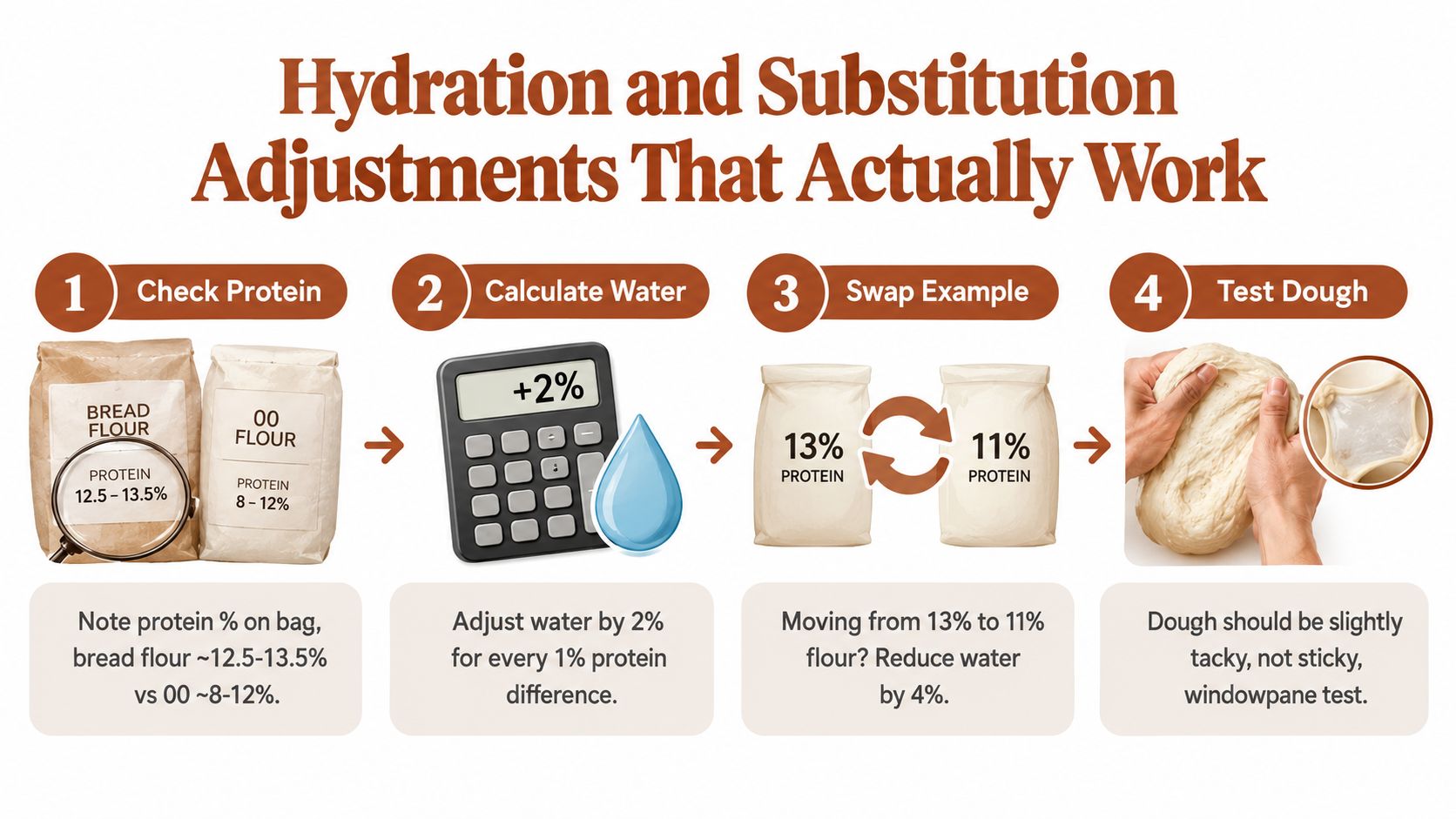
- Read the protein lines. Bread flour near 13% and 00 flour near 11% may behave very differently, even though both labels can appear suitable for bread.
- Hold back water. Start about 1–2 percentage points lower when switching to a softer 00. Add the reserved water only if the dough feels firm and tears easily.
- Extend the rest. Allow about 10 additional minutes after mixing. The flour may absorb more water during this pause, preventing an unnecessary correction.
- Check gluten development. Look for dough that is tacky and cohesive rather than runny or paste-like. A windowpane test gives a clearer checkpoint than the 00 label alone.
The common rule of changing water by 2% for every 1% protein difference can serve as a rough starting point, but it is not a universal law. A flour's W-value and milling behavior may matter more than a small protein gap.
For a softer whole-grain bake, this soft whole wheat cookie recipe shows why hydration depends on both the product and the texture you want.
A 50/50 blend gives beginners a controlled way to compare flours. Bread flour supplies more structure, while 00 can bring a smoother, more extensible feel. If the blend becomes wetter, do not automatically increase yeast or salt. First check whether the flour can support the added water, then judge fermentation by dough growth rather than the clock. Water changes handling and fermentation, while flour strength determines whether that water becomes workable dough or a sticky mass.
For a closer look at handling wet dough, read this guide to high-hydration dough.
Troubleshooting Dense Crumb Pale Crust and Weak Rise
Most flour-related failures leave a physical clue. Read the crumb, crust, and dough surface before changing several variables at once.
Match the symptom to the likely cause
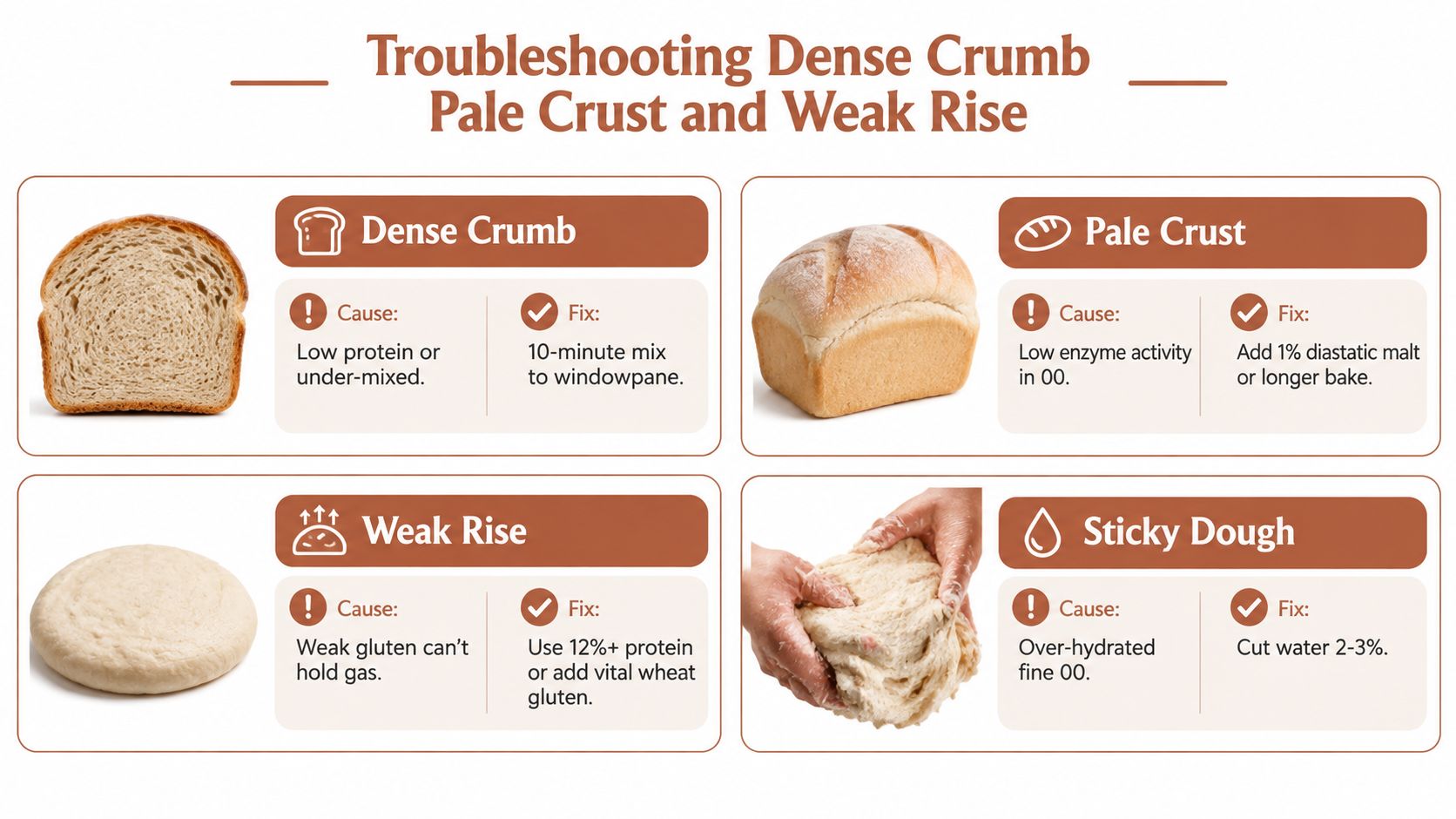
Dense crumb: Low protein or insufficient mixing may leave the dough unable to retain fermentation gas. Mix until the dough reaches a convincing windowpane, and give the gluten enough time to develop before adding more yeast. If the dough still spreads and feels weak, choose a stronger flour or a 00 product intended for bread rather than pastry.
Pale crust: Some 00 pizza flours brown slowly in a weaker home oven because they may lack the enzyme support or available sugars that encourage color. This discussion of flour types and pizza baking highlights the trade-off between 00's high-heat performance and paler results at lower temperatures. A longer fermentation or a longer bake may help, but don't raise the oven temperature blindly if the crust is already drying out.
Gummy texture: The dough may contain more water than the flour can bind, especially when a softer 00 replaces a stronger bread flour without a formula change. Reduce the next batch by 2–3% hydration, using the hydration comparison as background for why the flour category matters.
Weak oven spring: Over-proofing is a common cause, but flour strength can also be mismatched. Shorten bulk fermentation, inspect the dough's expansion rather than relying only on elapsed time, and verify the protein and intended use on the bag. A strong bread flour often gives a more dependable rise when the dough needs to support a tall shape.
Troubleshooting habit: Change one variable, record the dough feel, and compare the baked crumb. Flour substitution becomes manageable when each batch answers one question.
Don't diagnose every flat loaf as a yeast problem. A weak gluten network, excess water, or a flour selected for tenderness can all produce the same disappointing height.
How to Choose the Right Flour for Your Oven and Recipe
Your peak oven temperature and desired crust should decide the flour before the label's reputation does. A very hot pizza oven can take advantage of a strong, finely milled 00 designed for short baking, while a standard home oven often rewards bread flour's structure and browning tolerance.
Use the recipe first
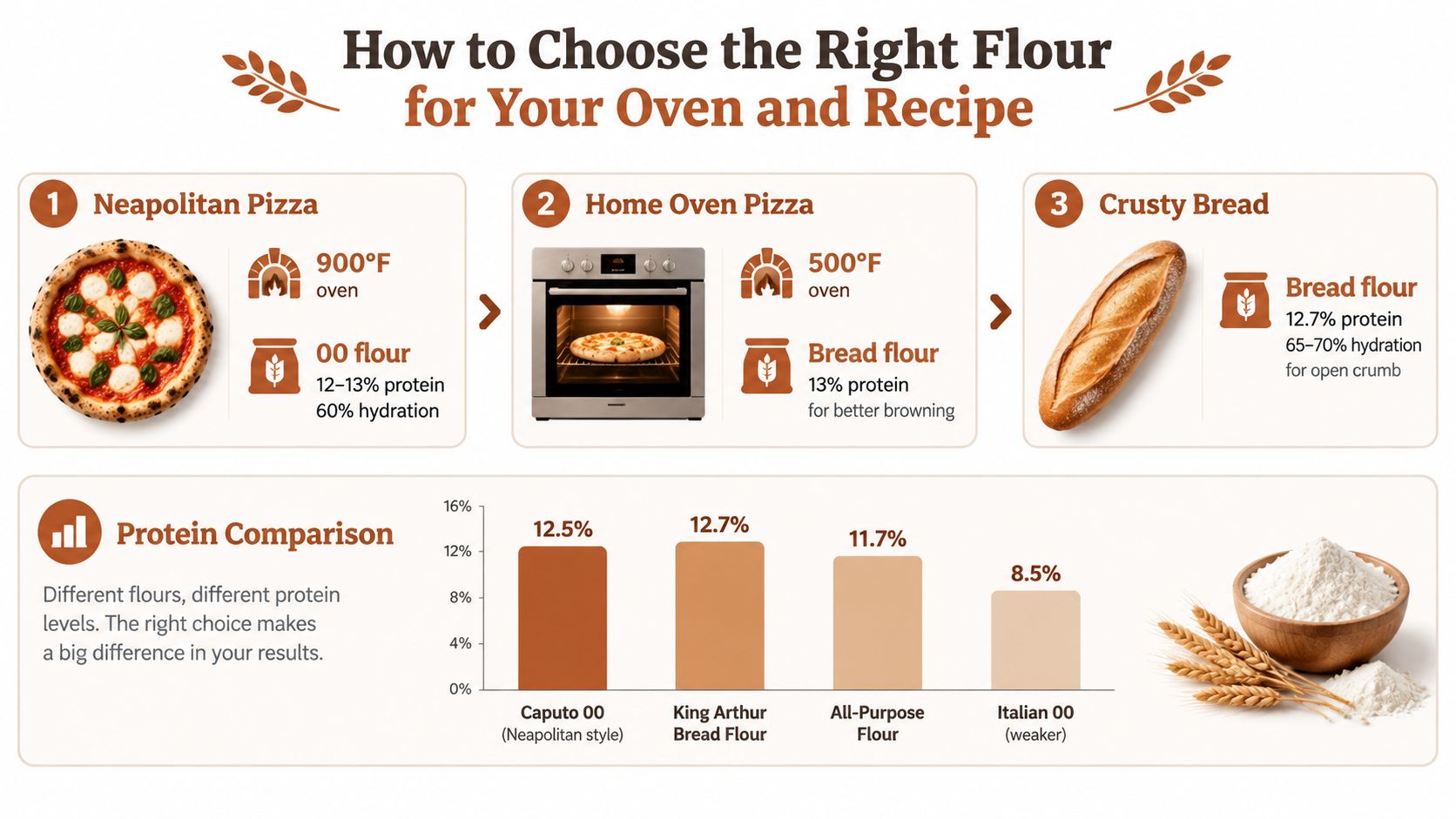
For Neapolitan-style pizza in a 900°F oven, a finely milled 00 around 12–13% protein and roughly 60% hydration is a logical starting point when the product is made for that application. A home-oven pizza around 500°F may perform more reliably with bread flour around 13% protein, particularly when you want stronger browning and a crust that supports substantial toppings.
For crusty bread, bread flour around 12.7% protein and 65–70% hydration can provide the strength needed for an open structure, provided the formula and fermentation are controlled. For laminated pastry, a lower-protein pastry 00 or tipo 0 may be a better choice than either standard bread flour or strong pizza 00.
Let fermentation complete the picture
A weaker 00 can gain practical strength during a long, carefully managed cold fermentation, while strong bread flour can handle a shorter rise with less drama. That doesn't make fermentation a substitute for the correct flour. It means time, temperature, hydration, and flour strength work as a system.
For home baking, a simple decision path works:
- Choose the recipe. Pizza, sandwich bread, focaccia, and pastry demand different balances of strength and extensibility.
- Check the oven. Higher heat favors a suitable 00 pizza flour, while moderate home-oven heat often favors bread flour.
- Read the bag. Compare protein, W-value, P/L ratio, and ash where available.
- Adjust the water. Don't assume a direct swap will preserve dough consistency.
- Bake for the crust you want. Tender and extensible isn't automatically better than tall and chewy.
The final filter is one question: What is your peak oven temperature, and what crust do you want? Answer that before you shop, and bread flour vs 00 flour becomes much easier to resolve.
If you want controlled fermentation and proofing while testing difficult high-protein doughs, D'BakerAid™ is a precision bread-making appliance system with a yeast fermentation bowl, a dough proofing bowl, and a temperature and time control hub. Visit DBakerAid™ to compare the system with your current setup and choose the flour experiments you want to make repeatable.