

You feed your sourdough starter before bed, expect a lively rise by morning, and find only a few scattered bubbles. The jar isn't necessarily failing. The flour may be setting the pace. Bread flour, all-purpose flour, whole grain flour, and rye each give the culture a different mix of protein, minerals, enzymes, and texture.
That makes bread flour for sourdough starter a useful choice, but not an automatic winner. It can create a stronger, more gas-retentive starter once the culture is established, while whole wheat and rye often provide more accessible nutrients for early microbial activity. Your best flour depends on whether you want fast activation, predictable feeding, a mild profile, or more complex fermentation character.
Table of Contents
- Introduction to Flour Choices for Starters
- Understanding Starter Fermentation Principles
- Comparing Bread Flour All Purpose Whole Grain and Rye
- Effects of Protein and Enzyme Levels
- Adjusting Hydration and Feeding Ratios
- Choosing Flour Based on Starter Goals
- Conclusion and Next Steps with D'BakerAid
Introduction to Flour Choices for Starters
A sluggish starter often looks like a water problem. You add more water, stir harder, and wait longer. Sometimes the issue is that a white, high-protein flour is giving a new culture a strong structure before the microbial population has fully developed.
Bread flour is commonly identified by a protein level of about 11–13% or 12–14%, depending on the flour and reference guide. That protein supports stronger gluten development, which helps a mature starter hold fermentation gas and rise more visibly. A beginner sourdough flour guide describes bread flour around 11–13% protein as a useful starting choice, while another baking reference places it around 12–14%.
Whole grain and rye behave differently. Their bran, minerals, and enzyme activity can make fermentation feel faster, especially during early feedings. The trade-off is a starter that may peak and collapse sooner, making timing less forgiving.
Practical rule: Use bread flour when you want structure and consistency. Add whole wheat or rye when you need more early activity or a stronger flavor direction.
The important question isn't "Is bread flour good for sourdough?" It's what job do you need the flour to perform?
Understanding Starter Fermentation Principles
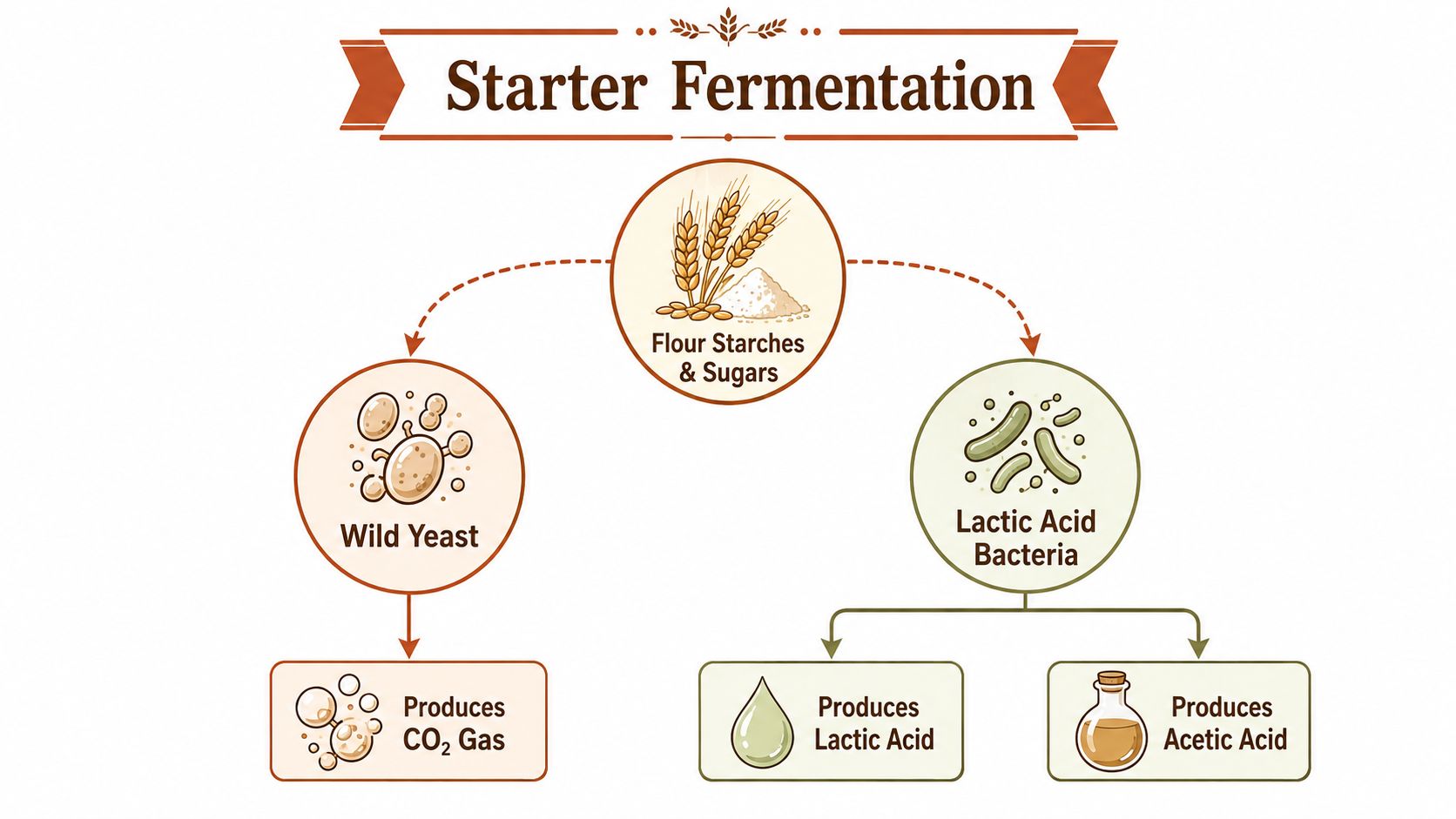
A sourdough starter isn't just flour paste with bubbles. It's a living culture of wild yeasts and lactic acid bacteria, fed by the carbohydrates available in flour. A major academic handbook chapter on bread fermentation describes sourdough as flour and water fermented with lactic acid bacteria, commonly abbreviated LAB, and yeasts.
The process works as a partnership:
- Wild yeasts use available flour-derived sugars and produce fermentation gas, which creates bubbles and expansion.
- Lactic acid bacteria produce acids that shape the starter's aroma, flavor, and acidity.
- Flour starches and sugars provide the material both groups need to continue fermenting.
Protein isn't the microbes' primary fuel. It mainly changes the physical environment around fermentation. A higher-protein flour forms a stronger gluten network, so the gas produced by the culture has more structure to occupy and can remain visible for longer. This is why a bread-flour starter may show a clearer rise even when another flour is fermenting actively but losing gas through a looser matrix.
Why temperature changes the result
Flour choice can't compensate for an unsuitable environment. Fermentation is most active at 75–95°F, or 24–35°C, according to the cited fermentation and yeast guidance. The academic sourdough reference places sourdough fermentation within the interaction of flour, LAB, and yeasts, while the temperature range helps explain why control matters.
A starter at the cooler edge of your kitchen may develop slowly. A warmer starter can move quickly from feeding to peak and then into collapse. The same flour can therefore appear weak one day and overactive the next if temperature and feeding timing change.
D'BakerAid's system includes a Stage 1 yeast fermentation bowl and a hub that controls temperature and time. Used as a controlled environment, it can reduce the day-to-day swings that make it difficult to tell whether flour or temperature caused a change. The machine doesn't replace an active culture, but it can make the fermentation conditions more repeatable.
The key distinction is simple: microbial activity creates gas and acids, while flour structure determines how well the starter displays and retains that activity.
Comparing Bread Flour All Purpose Whole Grain and Rye
Each flour brings a different balance of structure and microbial access. Bread flour contains more protein than many all-purpose flours and is often used to create a firm, elastic starter. Whole grain and rye contain more of the grain's outer and inner components, which can make fermentation more responsive but also less visually predictable.
The comparison below uses qualitative fermentation descriptions because flour brands vary.
| Flour Type | Protein % | Fermentation Speed | Texture Impact |
|---|---|---|---|
| Bread flour | About 11–13% or 12–14% | Moderate during early activation, steadier once established | Elastic, structured, often stiffer |
| All-purpose flour | Varies by flour | Moderate and generally manageable | Softer, less elastic than bread flour |
| Whole grain flour | Varies by grain and milling | Often faster than white flour | Heavier, more textured, can peak quickly |
| Rye | Varies by product | Often fast for starter development | Sticky, dense, and less elastic |
Bread flour is a practical maintenance flour because its gluten network helps the starter retain gas. It isn't always the fastest flour for creating a new culture. Whole grain and rye can provide more accessible nutrients and enzymatic activity, which may help early fermentation get moving.
Many expert methods recommend a 50/50 whole-wheat-and-bread-flour blend, balancing whole grain's mineral and enzyme contribution with bread flour's stronger structure. The Sourdough Journey's starter guide specifically describes this balance and notes that bread flour becomes more useful for consistency after the starter is active.
Choosing a single flour or blend
Choose bread flour alone if you want a clean, stable routine and a starter that holds its rise clearly. Choose whole wheat or rye when your priority is early activity, or combine them with bread flour when you want both responsiveness and structure.
For a more detailed explanation of how flour varieties differ in baking applications, see this guide to bread flour types. The practical takeaway is that there isn't one universal winner. A blend often gives beginners a wider margin for error than a single flour.
Effects of Protein and Enzyme Levels
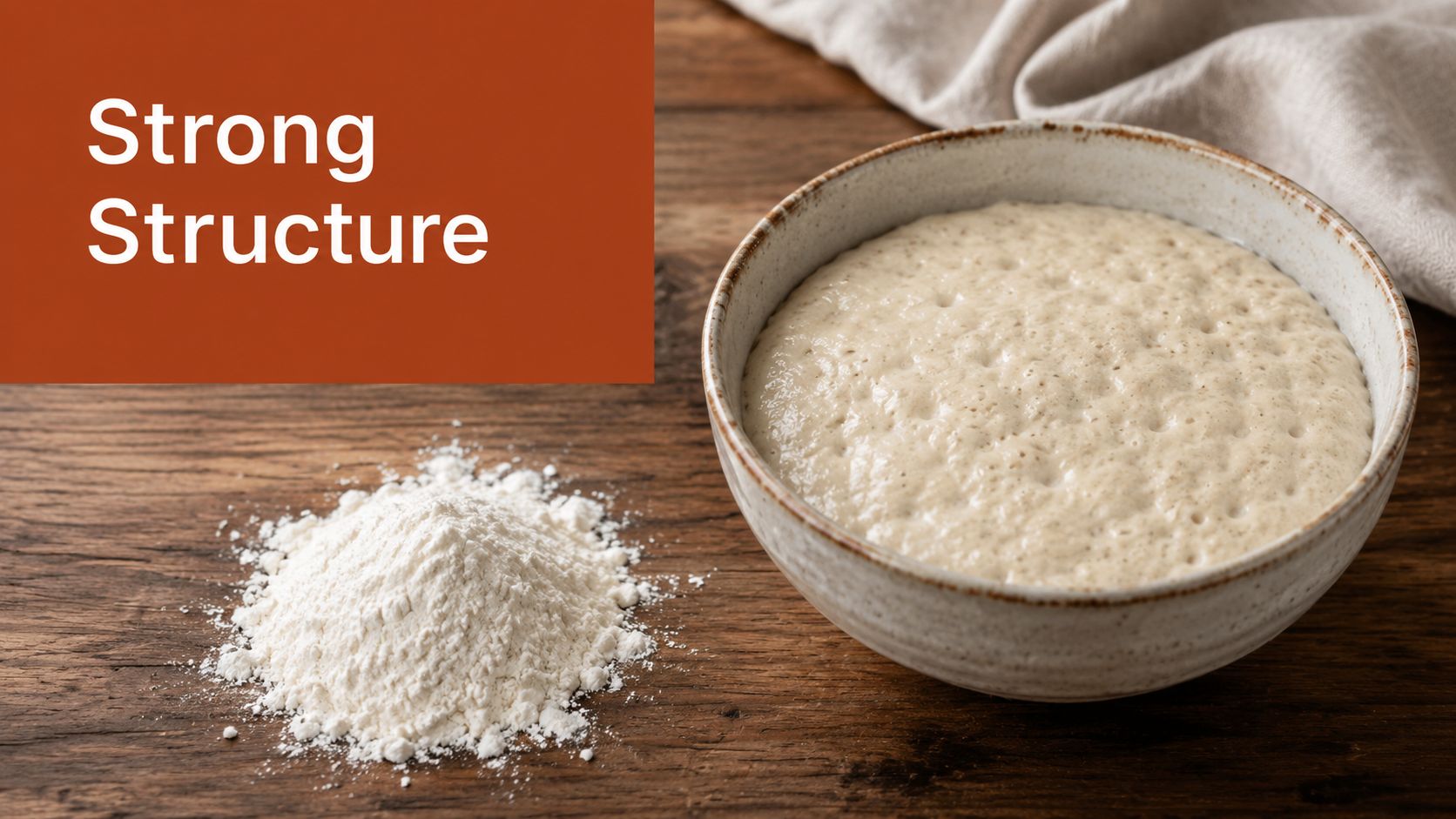
A starter's texture reflects a balance between gas production and gas retention. A loose mixture has more room to expand, yet it may let water and bubbles escape. A firmer mixture holds its shape more clearly, although its rise can look modest until pressure builds inside the gluten network.
Bread flour generally shifts the starter toward that firmer texture. Its higher protein supports gluten development, helping the culture retain gas and making visible rise easier to track. During fermentation, protease enzymes break protein bonds, gradually making the mixture less elastic and more extensible, as explained in The Perfect Loaf's discussion of high-protein white flour.
This produces two signs that beginners can mistake for each other:
- The starter may feel stronger. A resilient gluten web can hold bubbles and preserve a domed shape.
- The starter may appear slower. A firmer mixture does not expand as freely as a wetter one, even while yeast and bacteria remain active.
Protein also affects the bread made later. A mature starter that retains gas can contribute to dough with better support for an open crumb. Still, making every feeding extremely stiff can hide the culture's true expansion and make mixing unnecessarily difficult.
Enzymes create the counterbalance
Whole grain flour carries more of the grain's minerals, enzymes, and outer-layer components into the starter. These inputs can support stronger early activity, while also changing how quickly the culture uses available food and how soon the mixture loses structure. In other words, flour choice helps steer both the starter's microbial ecology and its developing flavor, not just its texture.
For a closer comparison of protein levels, see this flour protein guide. The practical rule is simple: use more protein for structure, more whole grain for accessible activity, and enough water for the culture to move through the mixture.
Adjusting Hydration and Feeding Ratios
A feeding ratio describes the relative amounts of starter, flour, and water by weight. The familiar 1:1:1 ratio means equal parts of each. A 1:2:2 ratio uses one part starter, two parts flour, and two parts water, creating a larger feed relative to the existing culture.
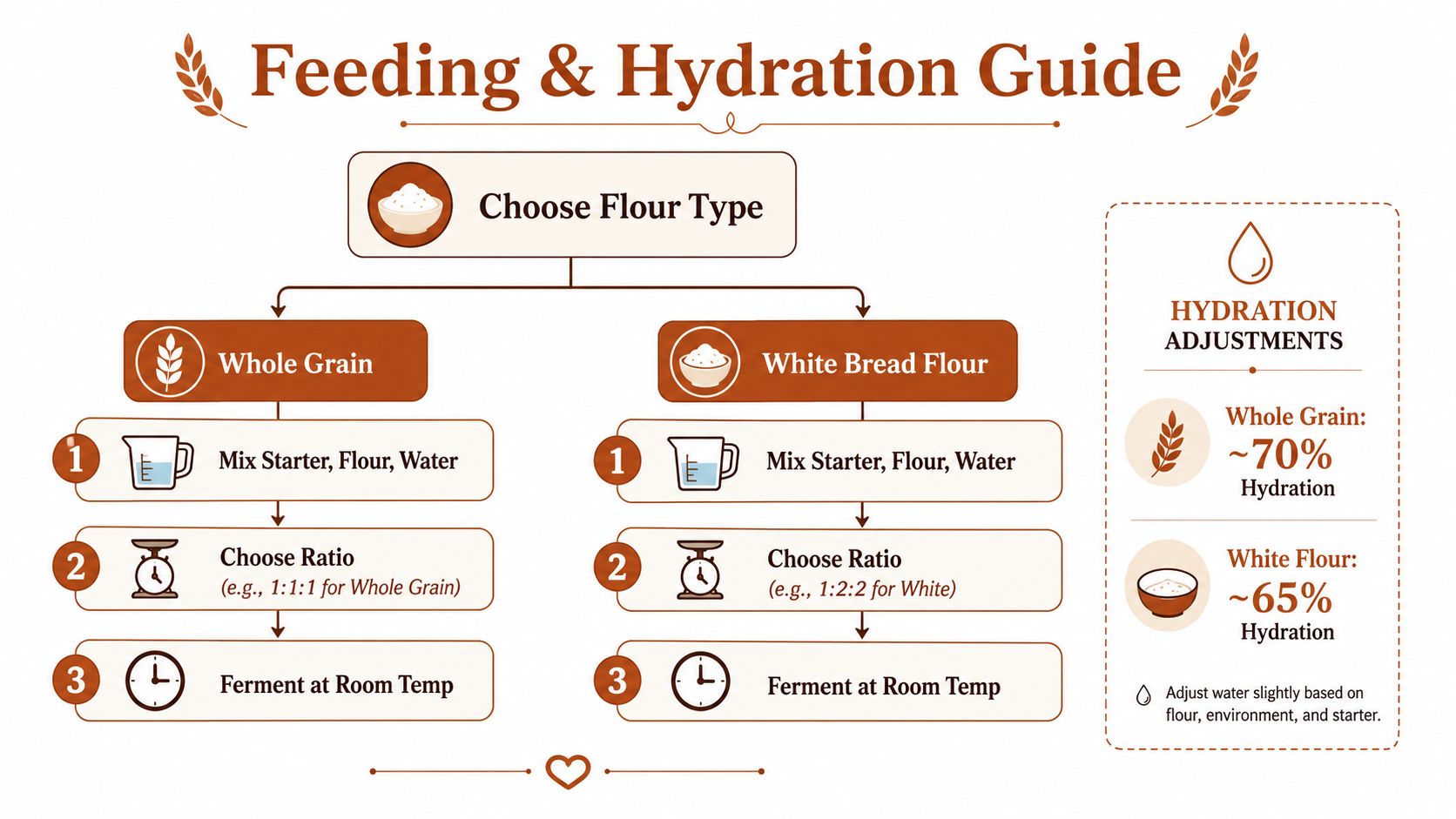
Use the ratio as a control for speed and timing:
- A smaller feed, such as 1:1:1, gives the existing culture less fresh flour to work through. It can be useful when you want a quicker peak and can watch the jar.
- A larger feed, such as 1:2:2, gives the culture more flour and water relative to the inoculating starter. It can support a longer fermentation window.
- A whole grain feed may absorb water differently from white bread flour, so the same nominal ratio can produce a thicker or looser mixture.
- A bread-flour feed may feel stiffer because its stronger gluten network binds the water differently.
The infographic uses approximate reference points of about 70% hydration for whole grain and about 65% for white bread flour. Treat these as starting points, not laws, because milling, bran content, and flour brand affect absorption.
A simple adjustment process
Start with your usual ratio and observe the texture immediately after mixing. If the bread-flour starter resembles a firm paste and barely spreads, add water gradually at the next feeding. If a whole-grain starter becomes runny and collapses quickly, reduce water slightly or increase the flour portion.
Mark the starting level on the jar. Watch for bubbles, a domed surface, expansion, and eventual flattening. A starter that rises less dramatically may still be fermenting, especially if the flour produces a heavier mixture.
Timing matters more than a perfect number: Feed according to the starter's peak, aroma, and structure, not according to the clock alone.
Choosing Flour Based on Starter Goals
Flour choice can steer more than rise. It can also influence the microbial community that develops inside the starter, which gives bakers another reason to choose flour based on the result they want rather than habit.
A 2025 study comparing starters made with all-purpose, bread, and whole wheat flour found higher relative abundance of Levilactobacillus in bread-flour starters, while whole-wheat starters favored Companilactobacillus. The finding, reported in the published study available through PubMed Central, shows that flour choice can steer starter ecology and may affect flavor outcomes.
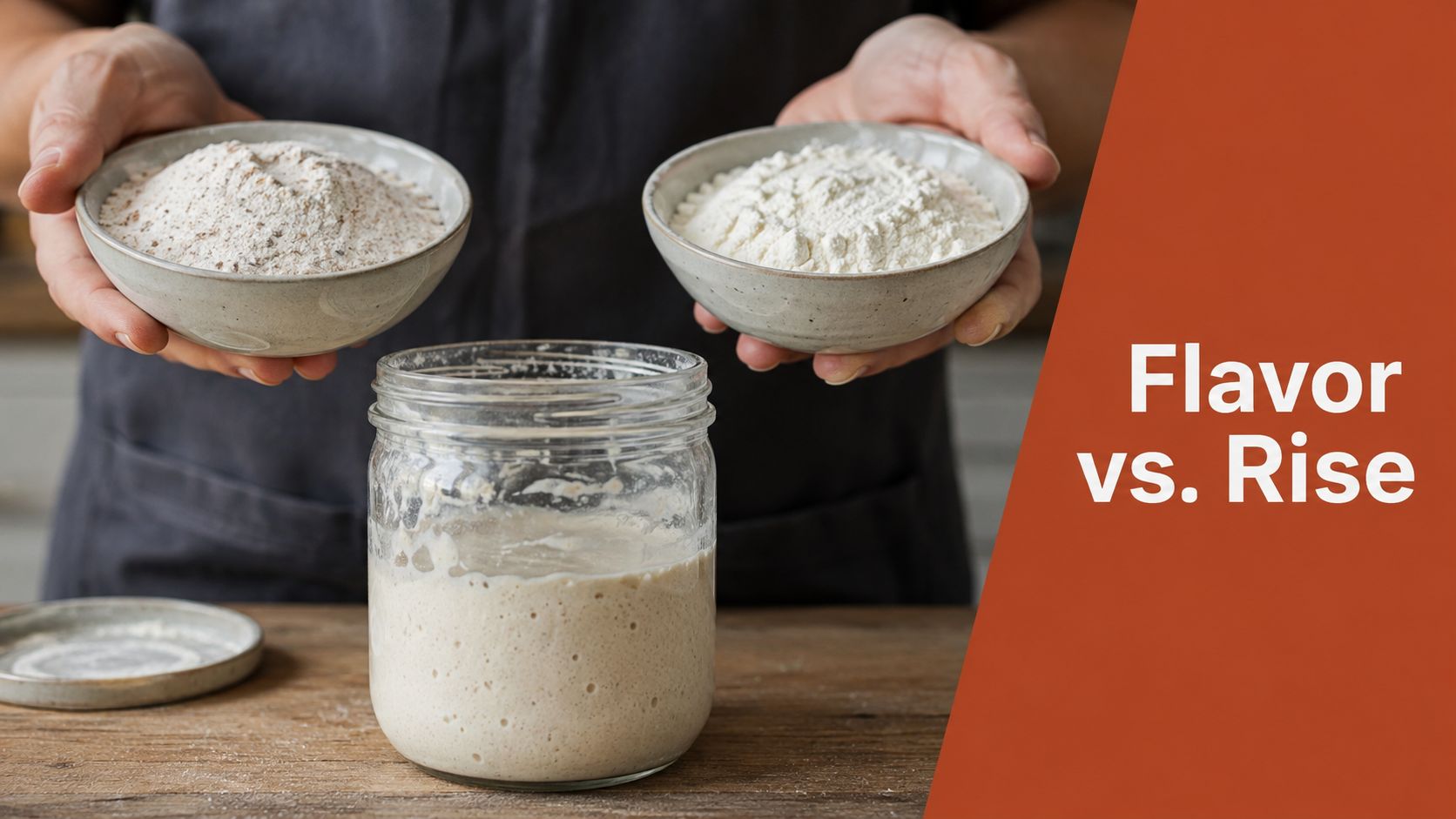
Match the flour to the job:
- For predictable maintenance: Bread flour offers a stronger structure and a clearly visible rise once the starter is active.
- For early activation: Whole wheat or rye can supply more accessible nutrients and enzymatic activity than refined white flour.
- For balance: A 50/50 whole-wheat-and-bread-flour blend combines whole grain activity with bread flour structure.
- For flavor exploration: Change the grain portion gradually and record aroma, peak timing, acidity, and texture rather than judging only by height.
A mild, structured starter and a more tangy, grain-forward starter aren't competing definitions of success. They're different fermentation goals. This whole-wheat sourdough starter guide can help if you're deliberately building a starter around whole grain character.
The most useful experiment is controlled: keep the water, feeding ratio, and temperature steady while changing only the flour. That way, you can identify what the flour changed.
Conclusion and Next Steps with D'BakerAid
Bread flour gives an active starter a stronger gluten framework, which can improve gas retention and make feeding behavior easier to read. Whole grain and rye can encourage faster early activity, while a blend often balances microbial access with structure. Protein affects texture, but it doesn't replace hydration, feeding discipline, or temperature control.
Keep your first routine simple. Choose a flour blend or bread flour, use a repeatable ratio, mark the jar, and track how the starter rises and falls. If temperature swings are making your results difficult to compare, D'BakerAid's controlled fermentation system can manage time and temperature through its fermentation bowl and hub.
For a sourdough starter that behaves consistently, control the variables you can, then change flour with a clear purpose.
DBakerAid™ offers a precision bread-making system with controlled fermentation and proofing stages, useful when bread flour and other high-protein doughs need repeatable timing. Visit DBakerAid™ to explore the system and its sourdough-focused recipes.