

You're standing over a jar on day 4, stirring a thick paste of whole wheat and water, wondering why it smells alive but still won't rise like the videos said it would. That's the part nobody warns you about, the starter looks busy before it's dependable. A whole wheat sourdough starter can wake up fast, then stall, then rebound, and if you've already lost one jar, the trick is learning what the culture is telling you instead of treating it like a broken recipe.
Table of Contents
- Why Whole Wheat Makes a Different Starter
- Day-by-Day Build From Flour and Water
- Feeding Ratios, Hydration, and Temperature
- Long-Term Storage on the Counter and in the Fridge
- Myths Worth Dropping Before They Cost You a Starter
- Troubleshooting Smells, Slumps, and Stalls
- Using Your Starter in Whole Wheat Bread
Why Whole Wheat Makes a Different Starter
The first surprise for most beginners is that whole wheat isn't just “white flour with more color.” The bran and germ bring more of the flour's natural microbial life and more material for fermentation to work on, so the jar often wakes up faster and smells tangier sooner. That's part of why flour choice matters in starter maintenance, because the flour you feed changes the starter's ecology and its performance as a leavening culture, not just its flavor (Foods review on starter ecology).
A new baker usually sees that difference on day 2, 3, or 4 and assumes the starter is finished. It isn't. Whole wheat can look active before it's stable, especially if the room is warm, and that early burst can fade as the culture runs through its first food supply. The oldest bread traditions tell the same story in a different register, sourdough has been around for at least 6,000 years, and it stayed dominant until commercial yeast displaced it in the late 19th and early 20th centuries (BBC Travel).
What the jar is actually doing
Whole wheat starters often feel more responsive because they're working with a richer substrate. That doesn't mean they're stronger in the long run, it means they're louder at the start. If you've ever had a jar smell pleasantly sour in the morning and flat by evening, that's not failure, it's the culture burning through food faster than a new baker expects.
Practical rule: early bubbles are a sign of life, not a baking green light.
Long-lived starters prove the point. Bakers have maintained cultures for decades, including a 70-year-old German commercial starter, a 57-year-old starter at Hobbs House Bakery in the UK, and starter lineages traced to the mid-19th century California Gold Rush (Sourdough.co.uk). That durability comes from regular feeding, not luck.
Why beginners get tripped up
A lively day 4 jar can fool you because whole wheat ferments with more urgency than a plain white feed. The result is a starter that smells promising, rises a little, then collapses before it can be trusted. The working habit is simple, watch the rise-and-fall pattern, not the excitement level.
This matters even more if you like to compare starter performance to bread performance. A flour guide on whole-grain baking and protein content is a useful companion when you're deciding how much bran, gluten, and strength you want in the final loaf, and a practical one is the flour breakdown at D'BakerAid's flour protein content guide. The starter is the engine, but the flour sets the tone.
Day-by-Day Build From Flour and Water
A failed starter usually leaves a bad memory in the jar, so begin with a wide-mouth jar, a kitchen scale, whole-wheat flour, room-temperature water, and a loose lid or cloth. The scale does the critical work here. A starter mixed by weight behaves the same way from feed to feed, while one measured by cups can drift because flour packs differently and the hydration changes without warning. That drift is how you end up with a paste that is too stiff, too slack, or hard to read.
The first feedings
Mix equal weights of whole wheat flour and water for the first build, then keep it on a 24-hour cycle at the start. Whole wheat brings more wild microbes and more food for them, so the jar often moves faster than a white-flour starter, and the early smells can shift from raw grain to yeasty, then to a mild yogurt-like tang. If the culture looks flat after a day, that is common. It usually needs more time, more warmth, or both.
Start with a 1:1:1 ratio by weight for the early maintenance feeds, starter, flour, water. Once the culture begins doubling on a dependable schedule, switch to 1:2:2 so the jar has a longer stretch before the next refresh. That change matters because the starter is no longer just trying to wake up, it is trying to hold its strength between feedings. If you want to keep the math clean while you adjust feed strength, DBakerAid's baker's percentage calculator is handy for checking your flour and water totals against the starter you already have.
What the jar should look like
Early on, watch for small bubbles at the surface and around the sides, then a domed top after a few hours. After that, the jar should rise, peak in a rounded shape, and fall back down. That rise-and-fall pattern tells you more than the smell alone, especially if you are trying to recover from a starter that looked alive one day and went quiet the next.
| Whole Wheat Starter Build at a Glance | ||
|---|---|---|
| Day range | Ratio (starter:flour:water by weight) | What you should see |
| Days 1 to 2 | 1:1:1 or equal weights to begin | Paste thickens, few bubbles, mild grain smell |
| Days 3 to 5 | 1:1:1 | More bubbles, dome forms, sourness begins |
| Days 5 onward | 1:2:2 once activity is reliable | Faster rise, cleaner tang, clear peak and fall |
When to use it
A practical benchmark is a starter that rises and falls on a repeatable schedule, not one that smells active. If your room is cool or your flour is slow, the peak may come later, and a whole-wheat starter can still be healthy even when the timing stretches. A useful companion to that timing is how temperature affects bacterial growth, because warmth changes how quickly the culture eats, rises, and turns tangy.
One whole-wheat starter guide notes that a mature culture often shows its strongest bubbling after 8–12 hours, which is another check when the jar seems sluggish at first (Golden State Grains). The point is simple, a working starter keeps a clear rhythm, and whole wheat usually makes that rhythm easier to see once you know what the rise is telling you.
Feeding Ratios, Hydration, and Temperature
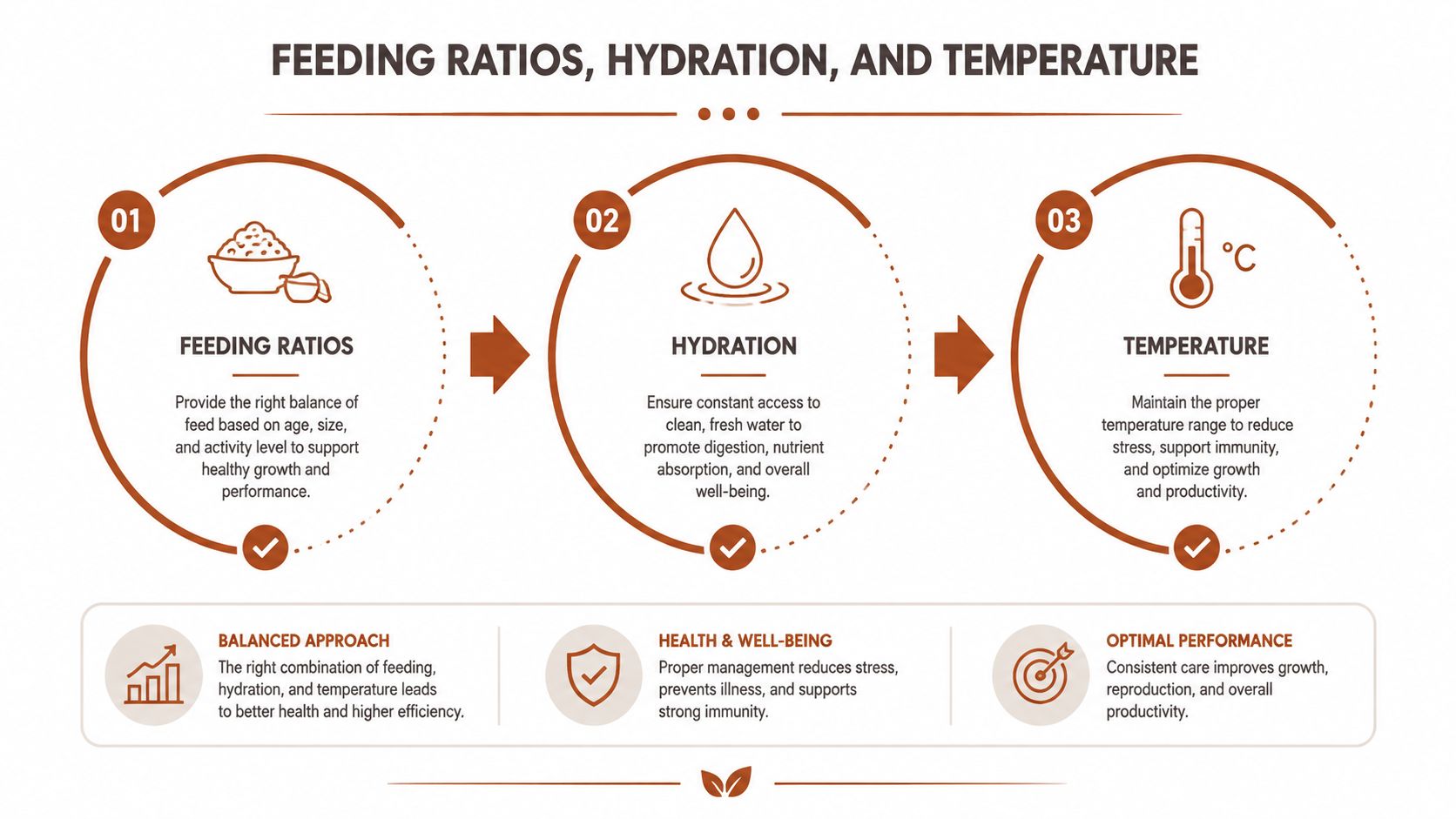
A starter that turns sharp too early is usually short on food, or it is sitting too warm for the feed you gave it. Whole wheat makes that easier to spot because it ferments with more wild microbes, rises faster, and turns tangier sooner than a white-flour starter. If you are trying to recover a jar that failed once already, the ratio and the temperature need to work together instead of being treated as separate choices.
A 1:1:1 feed moves fast and gives you a clear read on activity. A 1:2:2 feed stretches the schedule, gives the culture more time before peak, and usually softens the sour edge a bit. Weighing flour and water keeps hydration consistent, whereas volume measurements add guesswork and make the starter behave differently from one refresh to the next.
Match the feed to the rhythm
A daily baking routine usually works best with 1:1:1 because the starter stays active and predictable. If you want to slow the peak, skip a day, or keep the acid from building too sharply, 1:2:2 gives the starter more food and a longer window before it crests. That extra buffer matters with whole wheat, since the bran and germ can push fermentation along faster than you expect.
Temperature changes the schedule as much as the flour does. A jar on a cool counter may creep along and still be healthy, while one set near a warm oven can move through food quickly and go tangy before you are ready. For a clear primer on how temperature affects bacterial growth, the basic takeaway is simple, warmer conditions speed activity, cooler ones slow it down.
Decide your routine
- Daily baking: Keep the starter on the counter and feed 1:1:1 when it peaks and just starts to fall.
- Every-other-day baking: Use 1:2:2 so the culture has a longer working window.
- Fridge storage: Feed it before chilling, then bring it back to room temperature and refresh it before baking.
A starter that rises on cue and smells clean is easier to manage than one that surges one day and slumps the next. Sharp vinegar, solvent, or nail-polish notes usually mean the culture is hungry or running too hot, while a milky, yogurt-like tang usually points to steadier fermentation. If you want to check the math on any feed or dough plan, the Baker's percentage calculator guide is a practical reference for working out ratios without guessing.
Long-Term Storage on the Counter and in the Fridge
If you bake with whole wheat often, you can keep the starter on the counter and feed it as part of the day's rhythm. Once your baking stretches out, the fridge is usually the better place. Whole wheat ferments fast because the bran and germ carry more activity into the jar, so storage only works if it matches how often you bake.
Counter storage for active bakers
A counter-kept starter needs food before it runs flat. Feed it when it peaks and just starts to fall, because that is the point where the culture is active but not yet starved. In a warm kitchen, especially when the starter races through flour faster than expected, daily feeding may turn into twice-daily refreshes. That is normal for a lively whole wheat culture, and it usually means the jar is healthy, not failing.
A sharper smell does not always mean something is wrong. If the starter still rises well but starts to smell more acidic, give it a larger feed instead of trying to rescue it with extra fuss. A slightly thicker refresh can slow the acid build-up and stretch the time between feeds without changing the culture's character too much. I have revived plenty of sluggish jars this way, and the mistake is usually underfeeding, not impatience.
Fridge storage for slower routines
For baking once a week or less, feed the starter before it goes cold. A 1:5:5 feed gives it enough fresh flour and water to keep working after refrigeration, while the cold slows everything down so it does not burn through its meal too fast. The lid should be closed well, because the goal is to slow the culture, not dry it out.
Bringing it back matters just as much as putting it away. Take the starter out, feed it, and leave it at room temperature until it wakes up again. Use it near peak if you are baking, or return it to the fridge after it shows clear signs of activity if the dough is not ready yet. Skipping that warm-up is a common reason a starter looks alive in the jar but fails to lift bread in the dough.
Cold storage slows the culture, it does not pause it. A starter that has gone too long without refreshment will usually show its fatigue before it shuts down.
A practical maintenance reference is D'BakerAid's sourdough starter maintenance guide, especially if you are balancing fridge storage with bake days. The best routine is the one you can repeat without guessing.
Myths Worth Dropping Before They Cost You a Starter
A lot of starter trouble starts with advice that sounds careful but falls apart in the kitchen. The first myth is that metal utensils kill the culture. Short contact with a spoon or spatula is fine, and what matters is hygiene, regular feeding, and keeping your routine steady, not superstition about the bowl.
The usual myths and the reality
Organic flour is mandatory. It is not. Fresh flour matters more than a label, and what makes whole wheat advantageous is what it brings to fermentation, more wild microbes, faster activity, and a deeper tang, not whether the bag is certified one way or another.
Honey or sugar wakes up a sluggish starter. That is not how a tired culture usually comes back. Sweeteners can change the environment, but they do not fix an underfed starter or a jar that is sitting too cold to move at a normal pace.
You should never stir before measuring. Stirring does not damage the culture. It helps redistribute the activity so you are not pouring off one bubbly corner and treating it as a reliable sample. If you want to judge readiness, give the jar a quick mix, then look at the smell and the texture before you decide whether to feed.
Growth means ready. That is the mistake that wastes the most flour. A starter can puff up fast and still be unstable if it has not learned to peak and recede on schedule, especially with whole wheat, where fermentation can move faster than beginners expect.
One myth that causes panic
A starter that falls is not dead. It has peaked and moved on, which is exactly what a working culture does after it runs through its food. The job is to feed it at the right point, not to keep it permanently inflated.
The word “starter” confuses people because they hear it as something mechanical that should just keep turning. It is a living culture with a cycle, and the cycle matters more than one dramatic burst of rise.
If you stop treating every dip as an emergency, the culture gets much easier to keep alive. Panic-feeding usually does more damage than a normal fall ever will, and a calmer rhythm is what keeps a whole wheat starter reliable over time. For a practical maintenance reference, see D'BakerAid's sourdough starter maintenance guide.
Troubleshooting Smells, Slumps, and Stalls
A good starter tells on itself. The smell, the rise pattern, the surface texture, and any liquid on top all point to different problems, and the fix depends on reading those signs instead of reacting to the first odd detail. In my experience, the majority of stalled starters trace back to underfeeding or feed timing, and a dead culture is usually the last thing to suspect.
What the symptoms usually mean
Acetone or nail-polish smell usually points to underfeeding. The culture is hungry and burning through too little food, so the first move is a fuller feed and a bit more time between refreshes.
Runny texture with no rise often means the starter was fed too early or too lean. It is not getting enough structure to trap gas, so another discard-and-feed cycle at a stronger ratio is the next step.
Dark crust or no activity after feeding usually means neglect and dehydration. Scrape away the dry top, keep a clean core if it still smells normal, and rebuild with fresh flour and water.
Pink, orange, fuzzy, or foul-smelling growth is contamination territory. That culture does not get a recovery plan, it gets discarded.
If it rises but never peaks, the room is probably too warm or the feed is too lean for the pace of fermentation.
A mature starter should rise and fall on a predictable schedule, and a starter that only swells without a clear top usually needs a less aggressive environment. One practical anchor is the feed-rhythm benchmark from whole-wheat maintenance guides, if the starter cannot consistently double in the expected window, the problem is usually conditions, not damage, as noted in the D'BakerAid sourdough starter maintenance page.
A simple recovery mindset
Most sluggish jars come back after a few clean feed cycles. Give it the right ratio, keep it warm enough but not hot, and stop changing variables every few hours. A stable starter usually rewards patience faster than tinkering.
A practical reset is boring on purpose. Use one clean jar, discard down to a small amount, feed at the same ratio each time, and watch whether the smell shifts from sharp and solvent-like to tangy, wheaty, and clean. If the starter is revived in the wrong rhythm, it can look busy for a day and then stall again.
Using Your Starter in Whole Wheat Bread
A ripe starter is only useful if it reaches the dough at the right moment. For a moderate loaf, a common working range is 15% to 25% of the flour weight as ripe starter, then you build the dough around that timing so the starter peaks when you're ready to mix. If you feed too early, the starter can peak while you're still prepping; if you feed too late, you end up waiting on the culture instead of the bread.
Timing the feed to the bake
Feed the starter so its peak lines up with your mix time. With whole wheat, the culture often moves a little faster and can make the dough feel stickier and more active than a commercial-yeast loaf. That's normal. The tang can also come through more clearly, which is part of the appeal if you want a bread that tastes alive instead of neutral.
Use discard before it piles up. Pancakes, crackers, and other quick bakes are the easiest ways to keep the build process from feeling wasteful, and they're a good test of whether the culture is behaving the way you think it is. A discard that tastes flat or overly sharp can tell you just as much as a loaf.
What to expect in the dough
Whole wheat starter tends to give dough a slightly faster bulk, a stickier feel, and a more pronounced sour note than a plain white starter. That doesn't mean the dough is wrong, it means the flour and the culture are doing what whole grains do best. If you want the next step, keep a note of your feed ratio, room temperature, and peak time so the bread can be repeated instead of guessed.
If you're also building a bread workflow around controlled proofing and fermentation, DBakerAid™ offers a precision bread-making appliance system with staged fermentation, proofing control, and app support for recipe handling. It's one option for bakers who want the temperature and timing side of starter management to stay consistent, and you can see how it fits alongside this topic by visiting DBakerAid™.