

You're probably standing in the Kroger flour aisle doing the same thing most home bakers do. You grab one bag, flip it over, see “unbleached” on another, spot King Arthur, Bob's Red Mill, Kroger's own label, then wonder whether any of it matters.
It does. A lot.
If you want bread that looks and eats like real bread instead of a squat loaf with a tight, gummy middle, flour choice is the first real decision. And if your bigger goal is smarter homemade bread that fits a high-protein lifestyle, the right Kroger bread flour isn't just a nice upgrade. It's the base layer that makes the whole loaf work.
Table of Contents
- Navigating the Kroger Flour Aisle
- What Is Bread Flour and Why Protein Matters
- Your Guide to Bread Flour Brands at Kroger
- Beyond the Basic Loaf The High Protein Opportunity
- How to Nail Difficult High Protein Dough Every Time
- Common Questions About Homemade Protein Bread
Navigating the Kroger Flour Aisle
Kroger gives you plenty of options, but that doesn't mean it gives you clarity. The retailer lists over 300 distinct bread flour product variations in its broader bread flour assortment, along with over 281 varieties of organic bread flour, 267 results for King Arthur Bread Flour, and 234 for Bob's Red Mill Artisan Bread Flour on its platform, which tells you one thing fast. Selection isn't the problem. Decision fatigue is. You can see that breadth in Kroger's flour guidance and listings through Kroger's overview of flour types and assortment.
Then there's price noise. The broader bread flour market is valued at an estimated $13.43 billion in 2025, and retail pricing reflects how competitive and uneven this category has become. In the Kroger ecosystem, you'll see products like King Arthur Bread Flour, Gluten-Free, 1:1 Flour Replacement at $6.00 per pound, while Private Selection® Unbleached Bread Flour and Bob's Red Mill® Artisan Bread Flour in 5 lb. bags range from $4.49 to $10.99. Even Kroger shelf pricing has shifted, with bread flour moving from $13.99 to $8.99 in recent weeks in the referenced market snapshot, according to bread flour market reporting that includes Kroger retail context.
That's why “just buy flour” is bad advice.
Practical rule: If you're baking yeast bread, pizza dough, or rolls, stop treating flour like a commodity. Treat it like the structure ingredient, because that's what it is.
The good news is that most of the confusion disappears once you sort flour by purpose instead of by packaging. For everyday cookies or quick breads, almost any standard flour can limp across the finish line. For serious yeast baking, especially if you care about rise, chew, and consistency, your Kroger flour choice should be much tighter.
What Is Bread Flour and Why Protein Matters
Bread flour is flour with a stronger protein profile built for yeast dough. That protein becomes gluten when you add water and work the dough. Gluten is the elastic network that traps gas, supports expansion, and keeps a loaf from spreading into a sad, flat brick.
The scaffold that holds a loaf up
Think of gluten as the loaf's internal scaffold. Weak scaffold, weak loaf. Strong scaffold, better rise and better structure.
Industry data shows all-purpose flour typically contains only 10-12% protein, whereas true bread flour requires 12.5-14% to build the stronger gluten network needed for open crumb structure. A lot of home bakers get fooled because all-purpose flour can still make bread that rises, but that's not the same as bread with bakery-level volume and texture, as noted in this bread flour protein discussion for home bakers.
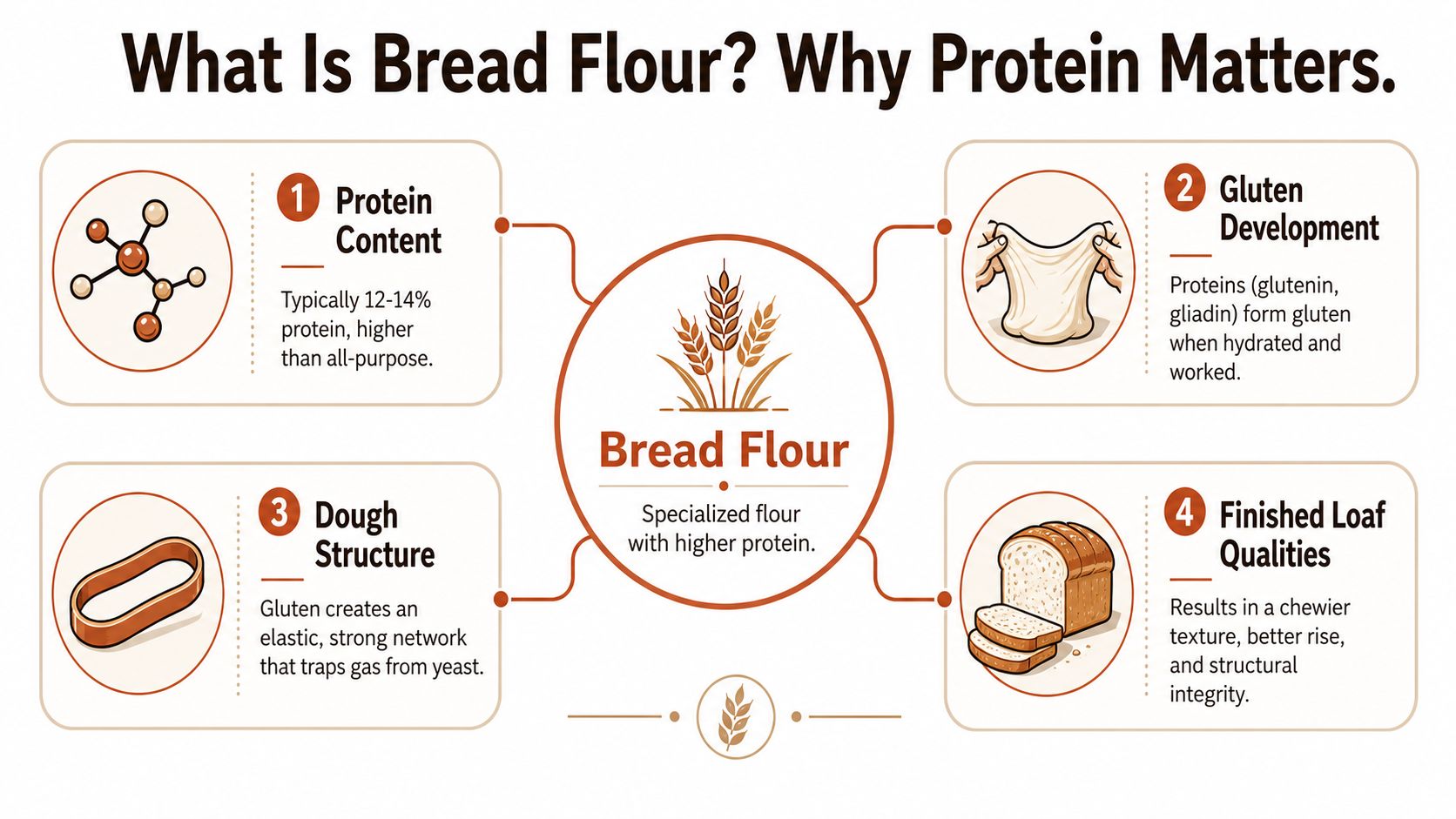
Kroger's own flour education gets the practical distinction right. Bread flour has increased gluten levels and is suited to breads, rolls, and pizza dough. Cake flour goes the opposite direction. It's processed to reduce gluten performance and increase starch behavior for soft cakes and scones. If you're trying to build chew and height, those flours are solving opposite problems. For a deeper breakdown, read this guide on flour protein content and baking performance.
What to buy for yeast baking
You also want to care about how the flour is treated. King Arthur bread flour sold through Kroger is described as unbleached and never bromated, which matters if you want stronger dough behavior and cleaner artisan-style handling. That product positioning appears on Kroger's King Arthur Bread Flour listing.
Here's the short version:
- Choose bread flour for sandwich loaves, pizza, rolls, and high-hydration doughs.
- Skip all-purpose flour when the goal is strength, chew, and open structure.
- Prefer unbleached flour when you want better natural dough performance.
- Store white flour well because it can last up to 24 months in a cool, dark place, while whole grain flours need refrigeration or freezing for up to 6 months for freshness, based on Kroger's flour storage guidance.
Bread that merely rises isn't the same thing as bread that holds shape, slices cleanly, and eats well the next day.
Your Guide to Bread Flour Brands at Kroger
If you're searching for the best bread flour at Kroger, three names keep coming up for good reason. King Arthur, Kroger Private Selection, and Bob's Red Mill are the practical shortlist for most shoppers.
What Kroger actually stocks
King Arthur is the easiest recommendation for bakers who want consistency without guessing. The biggest reason is protein transparency. King Arthur Unbleached Bread Flour is often preferred for high-hydration doughs because it has a consistent 12.7% protein, while many private-label flours don't publish the same level of detail. That matters when you're pushing dough harder with wetter formulas or longer fermentation. You can see that product detail on Metro Market's King Arthur organic bread flour listing.
Kroger's own bread flour can still be a sensible buy. If your goal is standard sandwich bread, dinner rolls, or pizza night, store-brand flour often works fine. The problem isn't that it's automatically bad. The problem is uncertainty. If the protein spec isn't clearly stated, you don't know how close it is to the stronger end of true bread flour performance.
Bob's Red Mill sits in the middle for a lot of shoppers. It appeals to bakers who want a recognized specialty brand and are willing to pay for that positioning. At Kroger, it's also one of the brand names you're likely to see repeatedly in search results and shelf mix.
Kroger Bread Flour Comparison
| Brand | Typical Protein | Best For | Price Point |
|---|---|---|---|
| King Arthur Unbleached Bread Flour | 12.7% | High-hydration doughs, artisan loaves, pizza, bakers who want repeatability | Premium |
| Kroger Private Selection Unbleached Bread Flour | Not clearly specified in consumer listing | Everyday sandwich loaves, basic yeast breads, budget-conscious baking | Value to mid-range |
| Bob's Red Mill Artisan Bread Flour | Not specified here | Artisan-style home baking, shoppers who prefer specialty brands | Mid-range to premium |
My blunt recommendation
Buy based on your tolerance for risk.
If you're a casual baker making straightforward loaves, Kroger's own bread flour is worth trying. If you're attempting sourdough, wetter doughs, or any loaf where structure matters, buy King Arthur first. Consistent protein is the feature, not the logo.
Use this quick filter:
- For beginners: Start with King Arthur. It removes one major variable.
- For budget baking: Try Kroger Private Selection for standard loaves.
- For brand-driven specialty shopping: Bob's Red Mill is a reasonable alternative.
- For advanced doughs: Don't guess. Use the flour with the clear protein target.
If the bag doesn't tell you enough about protein performance, don't expect the dough to tell you kindly.
Beyond the Basic Loaf The High Protein Opportunity
A lot of people didn't stop eating bread. They just started buying expensive “protein bread” that still doesn't move the needle much.
This is the key opening here. Once you understand how to shop for the right Kroger bread flour, you can stop thinking only about classic sandwich loaves and start thinking about homemade high protein bread that earns its space in your macros.
Why regular protein bread disappoints
Store protein bread usually lands in the middle. Better than plain white bread, not impressive enough to build a serious meal around. For macro-trackers, that's frustrating. Bread is supposed to be useful, not just tolerated.
The numbers are clear in the D'BakerAid high-protein recipe set. The 5 high-protein recipes produce loaves with ~170g of protein, averaging ~10.6g per slice, which is about double the ~5-7g per slice found in leading store-bought protein breads like Dave's Killer Bread or Kodiak, based on D'BakerAid's high-protein bread data.
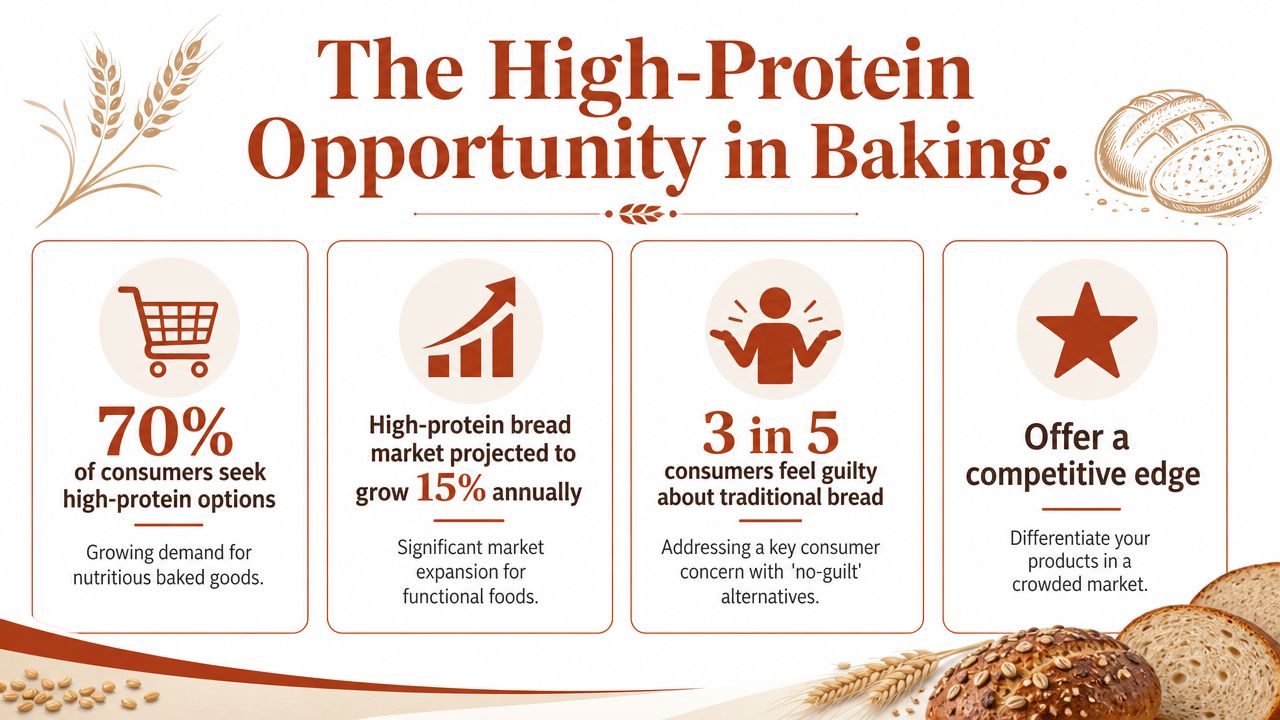
The setup is simple in principle. You start with a proper bread flour base, then build upward with vital wheat gluten and a protein source such as whey, pea, soy, or collagen isolate. That's how you get a loaf from “a little better than regular bread” into something that can support a higher-protein eating pattern.
For recipe examples and the full approach, look at high-protein bread at home.
What a serious homemade loaf can do
The strongest versions in that recipe lineup are built for people who want bread to contribute meaningfully to a meal. A 3-slice meal clears about 30g of protein from the bread alone in the core recipe lineup, which is exactly why this approach lands so well with lifters, busy parents, and anyone trying to stop wasting protein budget on weak bread.
Here's the practical split:
- Whey + sprouted wheat: best if you want a familiar look and a gym-friendly macro profile
- Pea or soy versions: the plant-based path
- Seeded loaves: better if texture matters to you
- Collagen version: workable, but don't treat it like the hero choice for sports-focused protein planning
A vegan route is possible too. One plant-based recipe using vital wheat gluten and pea protein milk reaches over 10g of protein per slice while staying fluffy and light, shown in this vegan high-protein bread recipe.
How to Nail Difficult High Protein Dough Every Time
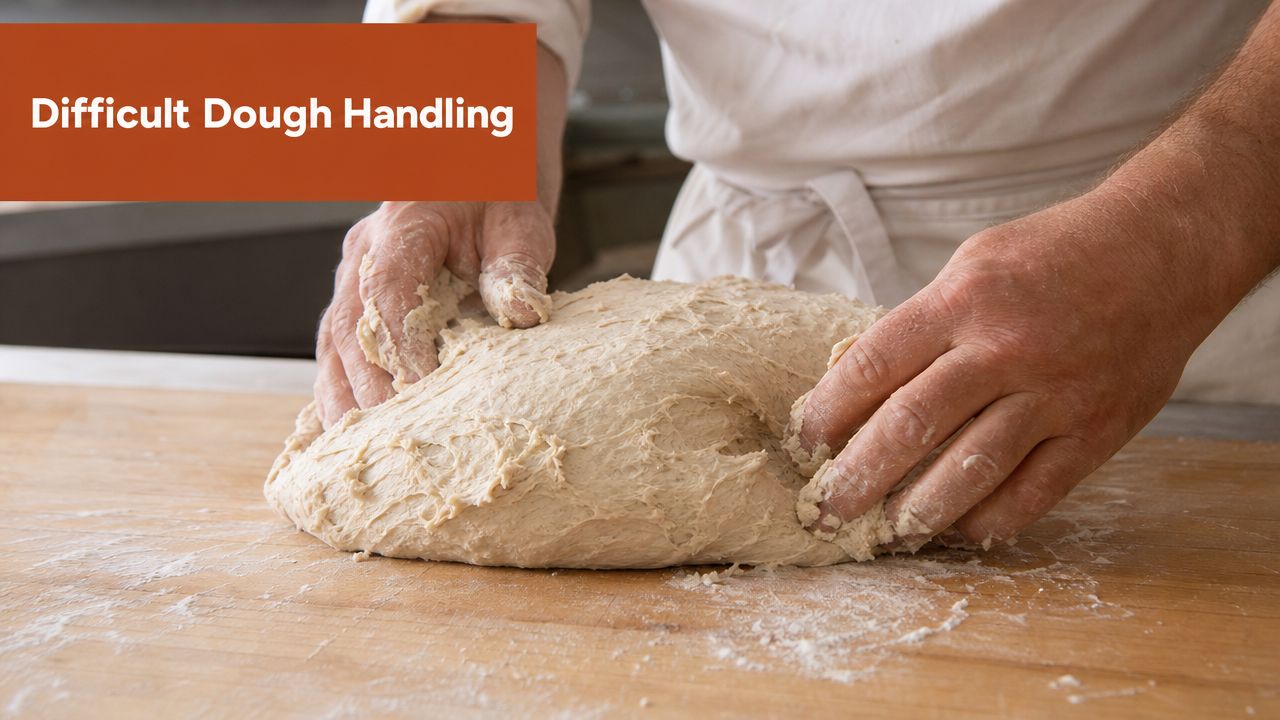
High-protein dough is harder to bake than regular bread dough. That's why so many first attempts disappoint.
Why these doughs fight back
Once you add protein isolate and vital wheat gluten, the dough changes character. It becomes denser, stiffer, and slightly tacky. It also doesn't behave like classic white sandwich dough. Expect it to rise about 50-75% rather than doubling, and don't judge it by old-school loaf cues.
That's where most bakers go wrong. They use regular visual benchmarks for a dough that isn't regular.
Use these expectations instead:
- Dough feel: heavier and tighter than standard bread dough
- Rise pattern: noticeable, but not dramatic
- Handling: less forgiving if your timing is sloppy
- Browning: faster than you may expect, especially with some protein choices
If you need better dough handling habits, this walkthrough on the stretch and fold technique for bread dough is worth your time.
Bench note: Don't chase a huge rise. Chase a stable dough and a loaf that bakes through cleanly.
The economics are also better than most shoppers assume. A D'BakerAid protein loaf costs ~$3.56-$6.81 to make, or about ~2-3¢ per gram of protein, which is about 42-60% cheaper than retail protein bread at ~5.2¢ per gram of protein. That's the right way to judge it. Not by pretending it costs pennies, but by measuring protein value per loaf.
A quick look at the process helps:
What to expect from the finished loaf
Don't expect airy bakery ciabatta. Expect a loaf that's built to do a job.
The finished bread has a tight, uniform crumb, a soft but heavier bite, and slices cleanly. Color shifts with protein choice. Whey and collagen stay closer to normal cream, pea can lean slightly grey-green and beany, soy runs darker and more tan, and whole-grain versions naturally look browner.
That trade-off is fine if your priority is function plus freshness. You're getting real bread texture, just with more structure and less fluff.
Common Questions About Homemade Protein Bread
Is it gluten-free
No. These high-protein loaves are not gluten-free. They're high in gluten because they use both wheat flour and vital wheat gluten. There is a separate gluten-free recipe range in the D'BakerAid app, but those loaves are not the high-protein ones.
How much protein is in it
Depending on recipe, protein brand, and slice thickness, the core recipe lineup lands around ~10-11g per slice, ~170g per loaf, and ~24g per 100g. That's why this style of loaf works for people chasing a 30g protein meal without relying on a shake.
What protein can you use
The dedicated recipe options use whey, pea, soy, or collagen. If you want the most familiar bread-like result, whey is the easiest place to start. If you're plant-based, go with pea or soy.
A separate example from King Arthur Baking's Multigrain Protein Bread reaches approximately 11 grams of protein per slice and uses a proofing time of 60 to 90 minutes until the dough rises 1 inch above the pan edge, shown in King Arthur's multigrain protein bread recipe.
Will it taste like protein powder
A little, depending on the protein source, but not in a harsh way if the formula is balanced. Whey and collagen versions are the mildest. Pea has the strongest personality. The loaf will be somewhat denser than plain white bread, and that's normal.
Do you need baking skill
Not much, if your system controls the hard parts. Fermentation and proofing are where difficult doughs usually fall apart. When those variables are controlled, repeatability goes up fast.
One extreme example shows how far protein bread formulas can go. A protein powder bread recipe shared in a baking group reports 30 grams of protein per slice in an 8-slice loaf, with each slice at 220 calories, 8g fat, and 15g carbohydrates, which you can review in this high-protein bread post from a baking community. That's not the standard everyday loaf typically desired, but it proves protein can be pushed very far in bread.
If you want fresh bread that fits a high-protein lifestyle, skip the weak store options and use a system built for hard doughs. DBakerAid™ is a precision bread-making appliance system with a Stage 1 yeast fermentation bowl, Stage 2 dough proofing bowl, and a control hub that manages temperature and time for repeatable results. It's rated 4.7★ and priced at US$299.95, with an optional D'Steamer and companion app at dbakeraid.app. The pitch is simple: more protein than store bread, better cost per gram of protein, and the machine handles the hard part. Start with the formulas in See the high-protein recipes, or go straight to Shop D'BakerAid.